Buying a pocket door for an international project involves more than choosing a stylish panel. Wall thickness, climate, hardware quality, and installation methods can change the final result. A door that fits a showroom sample may fail inside a humid bathroom or an older masonry wall.
Home-improvement expert Bob Vila notes, “Pocket doors slide into a wall cavity.” That simple description highlights the main buying risk. The hidden cavity must be planned before the wall closes. Experienced installers check studs, plumbing, electrical routes, floor levels, and the required clear opening. Small mistakes become expensive after finishing work.
This guide, “10 Pocket Door Buying Tips for Global Buyers,” focuses on practical decisions. It examines door dimensions, frame strength, rollers, soft-close systems, seals, moisture resistance, acoustic performance, and replacement parts. It also considers packaging, shipping damage, technical drawings, installation support, warranty terms, and supplier communication across time zones. Regional building requirements may differ, so buyers should confirm local standards with qualified professionals.
Do not trust attractive photographs alone. Ask for load ratings, material specifications, tolerances, and maintenance instructions. A cheaper frame can create rattling, sticking, or visible wall movement later. That happened in real renovation projects.
Still, no checklist removes every uncertainty. Product descriptions can be incomplete. Measurements can be misunderstood. A careful buyer compares drawings, samples, certifications, and installer feedback before placing an order. The best pocket door is not merely beautiful. It should slide quietly, stay aligned, and remain serviceable for years.
Choosing a pocket door begins with the space, not the door panel. Measure the opening, wall length, ceiling height, and nearby furniture. Leave enough clearance for handles, skirting boards, and electrical outlets. A narrow wall may not accept a full pocket frame.
Define the door type by daily use. A single pocket door suits bedrooms and compact bathrooms. Double doors work better for wider openings, but they need more wall space.
Solid panels provide stronger privacy and sound control. Glass panels bring light, yet they may reveal movement and require frequent cleaning. For humid rooms, select materials and finishes that resist swelling. Local building rules still matter.
Tip: Check the finished wall thickness before ordering hardware.
Tip: Confirm whether the door must lock, soften noise, or allow wheelchair access.
I once underestimated the space needed for a sliding mechanism. That mistake changed the furniture layout. Do not trust a catalogue drawing alone. Ask for installation dimensions, load limits, replacement parts, and maintenance guidance.
Climate also deserves attention. Dry air can create small gaps, while coastal moisture may affect metal components.
A reliable supplier should provide clear specifications, realistic tolerances, and installation support.
Some advice sounds obvious. It is still easy to miss.
Before buying a pocket door, measure the opening at the top, middle, and bottom. Walls often taper slightly.
Record the finished opening, not only the rough framing. Include flooring, trim, plaster, and tile thickness. A door slab may fit today but bind after flooring is installed. I recommend checking width, height, and diagonal measurements. Unequal diagonals usually indicate a frame that needs correction. Small errors matter. Leave clearance according to the installation guide. Do not rely on a standard formula alone.
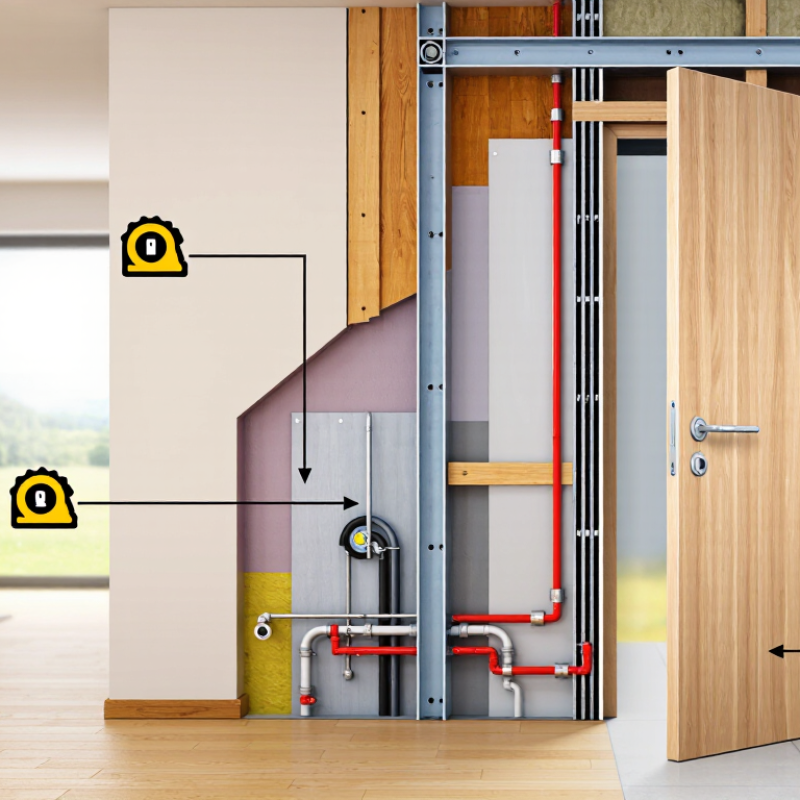
The wall cavity needs equal attention. A single pocket door usually requires space near twice the door width, plus room for the frame and adjustment. However, every system differs. Check the required wall depth, especially with 2x4 or 2x6 construction. Inspect the cavity for pipes, cables, insulation, and structural posts before cutting. Moving hidden services can add cost and safety concerns. A wall scanner helps, but it is not perfect.
On renovation projects, buyers sometimes measure the door panel and forget the handle hardware. That mistake can reduce usable clearance. Confirm the finished wall thickness, door weight limit, and track access before ordering. I once saw a suitable opening become unusable after thick wall panels were added. Recheck the measurements after framing. It feels repetitive. It prevents expensive changes. When details conflict, use the system’s technical documentation and ask a qualified installer to verify the site conditions.
Choosing a pocket door starts with its material, not its appearance. Solid wood feels substantial, but it can expand in humid climates. Engineered wood offers better dimensional stability and often reduces weight. Aluminum resists moisture, while steel provides strength but may need corrosion protection. Glass panels add light, yet they demand careful handling and compatible safety hardware.
Tips: Weigh the complete door slab before ordering hardware. Check the track’s rated capacity, not only the door’s advertised weight. For bathrooms or coastal homes, inspect finishes and fasteners for moisture resistance. Ask for installation drawings, adjustment limits, and testing information. Local building requirements may also affect fire, accessibility, or glazing choices.
Track systems deserve close attention. A top-mounted track keeps the floor clear, but the header must be rigid and accurately aligned. Soft-close units improve control, though they add cost and may reduce usable weight capacity. Floor guides should prevent swinging without creating a trip hazard. During site checks, I measure the rough opening twice and confirm the finished wall thickness. Small errors become loud rattles later. I have also seen buyers choose a beautiful lightweight slab, then discover the rollers were under-rated. That mistake is avoidable, but product tables are sometimes unclear. Request the maximum tested door weight, roller quantity, replacement parts, and maintenance instructions before payment.
| No. | Buying Dimension | Common Options | Typical Specification or Performance | What Global Buyers Should Check | Practical Tip |
|---|---|---|---|---|---|
| 1 | Door Material | Solid wood, engineered wood, MDF, or hollow-core construction | Solid and engineered doors generally offer better rigidity and sound reduction; hollow-core doors are lighter and usually less expensive. | Moisture resistance, panel stability, formaldehyde class, surface finish, and compliance with local building requirements. | Choose engineered wood for a balance of dimensional stability, weight, and cost. |
| 2 | Door Thickness | Approximately 35–45 mm for many interior applications | The door thickness must match the pocket frame, guides, handles, and latch hardware. | Confirm metric or imperial dimensions, finished door thickness, edge clearances, and wall-cavity width. | Measure the actual door slab rather than relying only on nominal door size. |
| 3 | Track System | Top-hung track, floor-guided system, or concealed track | Top-hung systems keep most moving parts above the door and normally provide a clear floor path; floor-guided designs can offer additional lateral control. | Track straightness, adjustment range, corrosion protection, mounting surface, and availability of replacement rollers. | Prefer a rigid, adjustable track with accessible maintenance points. |
| 4 | Hardware and Rollers | Steel or aluminum track, steel brackets, polymer or steel rollers, soft-close units | Ball-bearing rollers typically provide smoother movement than basic sliding wheels; soft-close hardware reduces impact at the end of travel. | Bearing type, roller adjustment, spare-part supply, fastener quality, and compatibility with the door mass. | Request the complete hardware load rating, not only the track length. |
| 5 | Weight Limit | Light-duty systems below 45 kg; medium-duty systems around 45–80 kg; heavy-duty systems above 80 kg | Actual limits vary by the complete assembly, number of rollers, mounting method, door width, and operating cycles. | Verify the certified load rating, safety factor, maximum door dimensions, and whether the rating is per door or per hardware set. | Select hardware with a clear safety margin above the finished door weight. |
| 6 | Pocket Cavity and Wall Structure | Prefabricated pocket frame, site-built timber or metal-stud cavity | The wall cavity commonly needs space for the door slab plus the frame, track, guides, and clearances; exact dimensions depend on the door size and frame design. | Stud spacing, finished wall thickness, structural load paths, plumbing, electrical wiring, and fire-rated wall requirements. | Inspect the wall before ordering; pocket doors should not cut through structural or service zones without approval. |
| 7 | Door Size and Clearance | Single doors, paired doors, and extra-wide accessibility doors | The required rough opening is usually wider than the clear passage because the pocket cavity must accommodate the door slab and frame assembly. | Clear opening, handle projection, trim allowance, opening direction, and accessibility criteria in the destination market. | Use the manufacturer’s rough-opening drawing and compare it with the required clear opening. |
| 8 | Security and Latch Set | Flush pull, privacy latch, passage latch, keyed lock, or emergency-release privacy hardware | Pocket doors typically use recessed hardware so the slab can enter the wall cavity; privacy functions depend on the chosen latch type. | Backset, door thickness range, cylinder format, emergency release, accessibility requirements, and corrosion resistance. | Confirm that the latch body and pull handle will not interfere with the pocket frame. |
| 9 | Environment and Finish | Painted, laminated, veneered, PVC-wrapped, or moisture-resistant finishes | Interior dry-room products are not automatically suitable for bathrooms, coastal climates, or unconditioned spaces. | Humidity exposure, temperature range, edge sealing, coating durability, and local interior-product standards. | Specify sealed edges and moisture-resistant construction for humid locations. |
| 10 | Testing, Documentation, and Delivery | Installation manual, load test information, spare parts, packaging, and shipping documentation | A complete specification should state door limits, tested cycles where available, installation tolerances, maintenance instructions, and replacement-part references. | Destination-country standards, customs documents, package dimensions, net and gross weight, lead time, and after-sales support. | Approve a technical drawing and sample hardware set before placing a large international order. |
Important: Weight limits, rough-opening dimensions, fire ratings, and installation requirements differ by product design and jurisdiction. Always verify the current technical documentation for the complete door-and-hardware assembly before purchase or installation.
Before buying a pocket door, inspect the wall cavity, not just the opening. Hidden pipes, cables, or structural posts can stop cassette installation. A qualified installer should scan the wall and confirm load paths before cutting. Retrofits become expensive quickly. Site measurements should include finished flooring, skirting, trim, and handle clearance. Ask for the required cavity width and header support in writing. That document prevents overseas communication errors. Local building and fire-safety requirements also need professional verification.
Accessibility deserves equal attention. WHO’s 2022 Global Report on Health Equity for Persons with Disabilities estimates 1.3 billion people experience significant disability worldwide. A narrow or heavy door can exclude users, even in a beautiful room. The U.S. Access Board’s ADA Standards specify a 32-inch minimum clear opening and five pounds maximum operating force. Check reach ranges, lever shape, contrast, and finger-safe closing. These details matter for children, older adults, and wheelchair users.
Choose tested rollers, anti-jump devices, and controlled-closing hardware. Do not rely on a soft-close label alone. Ask which safety tests support the claim. Maintenance should be simple: vacuum the track, inspect fasteners, and check smooth travel every few months. Use only the lubricant specified for the hardware. Humidity, dust, and settlement can change performance. I still think many buyers underestimate service access inside the wall. If a component fails, a removable jamb or access panel may prevent destructive repairs. That choice is easy to miss.
10 Pocket Door Buying Tips for Global Buyers
Supplier evaluation should begin with traceable evidence, not polished catalog photos. Request factory addresses, production capacity, material specifications, and recent quality records. ISO’s 2023 Survey reported more than 1.2 million ISO 9001 certificates worldwide, but certification alone cannot prove consistent pocket-door performance. Ask for batch inspection records, hardware load tests, moisture testing, and photographs of packaging before shipment. Visit remotely when travel is impractical. Small details matter.
Check certifications against the destination market and the product’s actual use. Fire-rated or acoustic doors need relevant laboratory reports, not generic compliance statements. Confirm test scope, report number, issuing laboratory, and expiration status. Clarify whether the quotation includes the door slab, frame, track, rollers, handles, seals, and installation drawings. Freight can distort the budget. UNCTAD reports that more than 80% of global merchandise trade by volume moves by sea, so compare ocean freight, insurance, port fees, duties, and inland delivery together.
Use Incoterms 2020 precisely. “Delivered” is not precise enough. Compare FCA, FOB, CIF, or DAP quotations and identify who handles customs clearance and local taxes. The World Bank’s 2023 Logistics Performance Index measures customs, infrastructure, tracking, and delivery timeliness; these factors can change the real purchase cost. Warranty language deserves equal attention. Specify coverage periods, replacement procedures, labor exclusions, and response times. A two-year warranty sounds useful, yet it may exclude rollers, corrosion, or installation damage. I would request spare hardware with every order. It adds cost, but prevents a small failure from stopping an entire project.
Recommended evaluation priorities for comparing suppliers, certifications, costs, warranties, and shipping terms.
This 100-point purchasing framework helps global buyers compare pocket door suppliers consistently. Higher scores indicate greater importance during supplier qualification and total landed-cost evaluation. Buyers should verify technical documents, warranty conditions, Incoterms, packaging, lead times, and applicable local building requirements before placing an order.