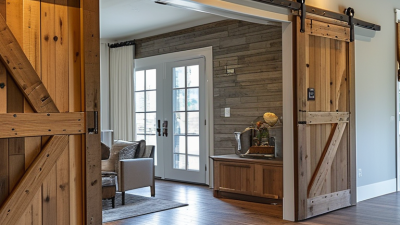
A folding barn door can free up floor space while adding a warm, architectural detail to a room. In 2026, the installation still depends on careful measuring, sound support, and hardware that matches the door’s weight. Unlike a standard sliding door, folding panels need enough room to stack and swing without striking nearby trim, furniture, or light switches. Measure twice. Then check again. A few millimeters can affect the track position, floor clearance, and how neatly the panels close. It is an easy detail to underestimate.
This guide introduces the main steps for installing a folding barn door, from checking the opening to fitting the track, pivots, and guides. You’ll see which measurements to confirm, what tools to prepare, and why the mounting surface matters. The wall must support the hardware; use the manufacturer’s instructions to locate suitable framing or specify approved anchors. Check the door’s weight rating and required clearances before drilling. Keep the panels level as you test their movement, and adjust them gradually rather than forcing a tight fold. Even a careful plan can miss an uneven floor or an out-of-square opening, so leave time for a final check. If the wall structure or hardware requirements are unclear, pause and get qualified help. The goal is a door that moves smoothly, stays secure, and fits the room—not merely one that looks finished in a photograph.
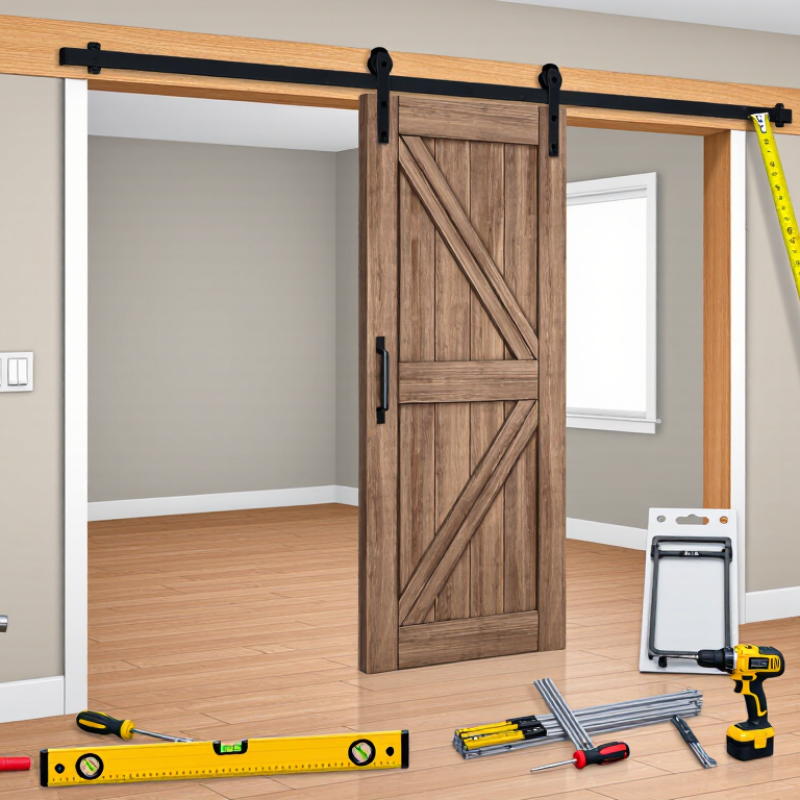
Before choosing a folding barn door, measure the doorway at the top, middle, and bottom. Older openings are often slightly out of square. Use the smallest width and height when checking fit, and note any sloping floor or uneven trim. Measure the wall beside the opening, too. The folded panels need room to stack without covering a switch, cabinet, or nearby passage. Small details matter.
Check the door’s panel dimensions, track length, and required clearance against your measurements. Confirm that the wall can support the track and the door’s full weight; drywall alone is not a suitable mounting surface. Locate studs or plan for appropriate structural backing before installation. Also inspect the area above the opening for trim, pipes, or other obstacles. A low ceiling can limit track placement. If the doorway has thick casing, compare its projection with the door’s path so panels will not catch as they fold. It is easy to assume the opening is standard, but that assumption can be wrong. When measurements or wall conditions are unclear, verify the installation requirements before buying.
Before installing a folding barn door, gather the tools and hardware so you can check fit before drilling. You’ll need a tape measure, pencil, level, drill, suitable bits, and a stud finder. Keep safety glasses nearby. Measure the opening, available wall space, and floor clearance; folding panels need room to stack without hitting trim or furniture. A second person can help hold the track during fitting.
Prepare the door panels, track, rollers, hinges or folding connectors, end stops, floor guide, and mounting screws. Confirm that the hardware matches the door’s weight and panel width. Use fasteners suited to the wall and a solid header or framing support; drywall alone is not a dependable anchor. Check the installation instructions for required clearances and screw sizes. I once underestimated how much trim affected the fold. Rechecking measurements is worth the extra minute.
Tips: Lay out each part on the floor and identify the left and right components before assembly. Mark stud locations, then level the track carefully; a small slope can make the panels drift. Test the door by hand before tightening everything fully. Keep fingers clear of hinges. Small details matter. If the wall feels weak or the track cannot be secured firmly, pause and get qualified help.
| Category | Tool or Item | Typical Quantity | Purpose or Selection Notes |
|---|---|---|---|
| Tools | Tape measure and pencil | 1 each | Measure the opening, door panels, track position, and required clearances; mark fixing points. |
| Tools | Spirit level | 1 | Check that the track and any header board are level before securing them. |
| Tools | Stud finder | 1 | Locate wall framing so the track or supporting header can be fastened into suitable structure. |
| Tools | Drill/driver and bits | 1 set | Drill pilot holes and drive the fasteners specified for the wall and door system. |
| Tools | Wrench or socket set and screwdrivers | 1 set each | Tighten track fittings, pivots, hinges, and other hardware using the appropriate tool. |
| Tools | Safety glasses and work gloves | 1 pair each | Use during drilling, cutting, and handling door panels or metal hardware. |
| Materials | Folding door panels | 1 matched set | Choose panels compatible with the opening and folding hardware; verify panel weight and dimensions against the kit limits. |
| Materials | Header board, if required | 1, sized to the track | Provides a suitable mounting surface when track fasteners cannot align with adequate framing; size and fastening depend on the installation. |
| Materials | Shims | A small pack | Help correct minor unevenness when positioning a header or adjusting the installation. |
| Installation hardware | Folding barn-door hardware kit | 1 kit for the selected door configuration | Confirm the kit includes compatible track, hangers or rollers, pivots or hinges, guides, stops, and installation instructions as applicable to its design. |
| Installation hardware | Track and header fasteners | As specified for the system and wall | Use fasteners suitable for the framing or substrate and rated for the installation load; do not assume drywall alone can support the track. |
| Installation hardware | Door guide and anti-jump devices | As supplied with the kit | Help guide the panels and keep rollers engaged; install in the locations and orientation specified in the kit instructions. |
| Installation hardware | Pull handle or recessed pull | 1 or more, as needed | Select a pull that does not interfere with folding panels, the wall, or the track when the door opens. |
| Installation hardware | Floor guide fasteners and optional stop trim | As required by the design | Check flooring type and door travel before fastening a floor guide; use trim only if the opening design calls for it. |
Quantities are typical planning estimates for one installation. Hardware layouts and fastener requirements vary by door system, panel weight, wall construction, and opening; follow the instructions supplied with the selected kit.
Before installing a folding barn door, inspect the opening and the wall where its track will sit. Remove loose trim, then check that the jamb is square and the floor is reasonably level. Measure the opening width and height in several places; older walls can vary more than expected. Note the door’s folded depth, handle projection, and nearby switches or furniture. Small details matter. Confirm that the chosen hardware is designed for the door’s weight and folding configuration, and follow its installation template for track position and clearance.
Locate the wall studs or install suitable solid blocking behind the finish surface. Drywall anchors alone are not a reliable support for a moving door. Check for hidden wiring or plumbing before drilling, then mark the track holes and verify the line with a level. It is tempting to trust one measurement, but rechecking saves awkward repairs. Do not guess. Fasten the track into the structural backing with hardware specified for the system, and tighten each point evenly. Before hanging the door, test the track by hand for movement or flex. If the wall bows, the instructions conflict with the site, or the fasteners do not engage solid backing, pause and correct the setup rather than forcing the installation.
Lay the door panels on a clean, padded floor, with their finished faces down. Check the instructions for the correct panel order and hinge direction; folding sets can differ. Keep the edges flush, then join the panels with the supplied hinges. A helper can steady the far end while you work. It prevents a small shift from becoming a crooked seam.
Use the specified screws, and drill pilot holes if the instructions call for them. Drive each screw straight, stopping when the hinge sits firmly against the wood. Do not force it. Over-tightening can strip a hole or mark the panel. Leave the hinges loose enough for a final alignment check, then tighten them evenly. The gaps should look consistent from top to bottom.
Attach the folding hardware at the locations shown in the installation guide, checking that each pivot and bracket faces the correct way. Measure from the panel edges rather than guessing. A pencil mark helps. Before lifting the assembly, fold and unfold the panels by hand on the floor. Watch for rubbing, pinched fingers, or a hinge that catches. If something feels uneven, pause and adjust it; a slight mismatch is easy to miss until the door is hanging.
Example only: for equal-width 18-inch panels, the assembled panel width is the panel count multiplied by 18 inches. Check your opening and hardware instructions before choosing panel dimensions.
Before hanging the door, confirm that the mounting surface has solid structural support. Use the hardware instructions to locate and fasten the track securely; drywall alone is not adequate. Ask another adult to help lift the panels onto the track. Keep fingers clear of hinges and pinch points. Small parts can shift.
Tips: Check the track with a level, then move the door slowly from end to end. If it drifts, scrapes, or binds, adjust the rollers or track as directed by the hardware instructions. Do not force it. A slight wobble may seem harmless, but it can worsen with repeated use.
Fit any supplied anti-jump devices and end stops, and check that each is firmly secured. Test the folding action several times, watching for uneven gaps, loose fasteners, or contact with nearby trim. Make sure the door cannot roll off the track or swing into a walkway. Recheck fasteners after initial use, especially if the panels feel heavier on one side. Clearance is easy to miss.