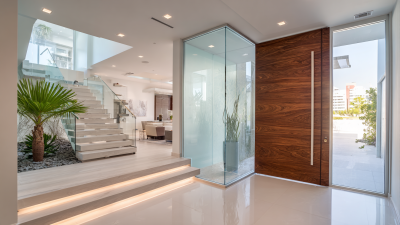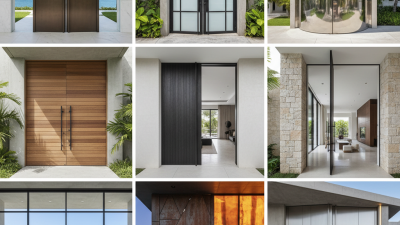
Choosing the best pivot doors exterior for a villa, hotel, or commercial entrance requires more than attractive photographs. Door weight, wind exposure, thermal performance, drainage, hardware quality, and installation accuracy all influence long-term results. In practical project reviews, a beautifully finished door can still fail when the pivot box is poorly aligned or the threshold lacks effective water control. Small errors become obvious after heavy rain.
Industry data supports a performance-led approach. The U.S. Department of Energy reports that windows and doors can contribute significantly to residential heating and cooling losses, especially when air leakage remains uncontrolled. NFRC guidance also emphasizes comparing U-factor, solar heat gain coefficient, and air-leakage ratings, rather than judging products by appearance alone. Meanwhile, Grand View Research identifies continued growth in the global doors and windows market, driven partly by renovation, energy efficiency, and premium architectural design. These reports offer useful direction, although market forecasts vary by region and product definition.
This guide examines leading China-made pivot doors for exterior applications, including aluminum, thermally broken, and oversized glass models. It considers tested performance, corrosion resistance, security hardware, finish durability, and after-sales support. Factory quality matters. So does the installer’s skill. A strong door may perform poorly when the opening is measured incorrectly or the drainage path is blocked. Buyers should request test documentation, project references, and clear warranty terms before ordering. Not every premium-looking slab performs well. That distinction matters.
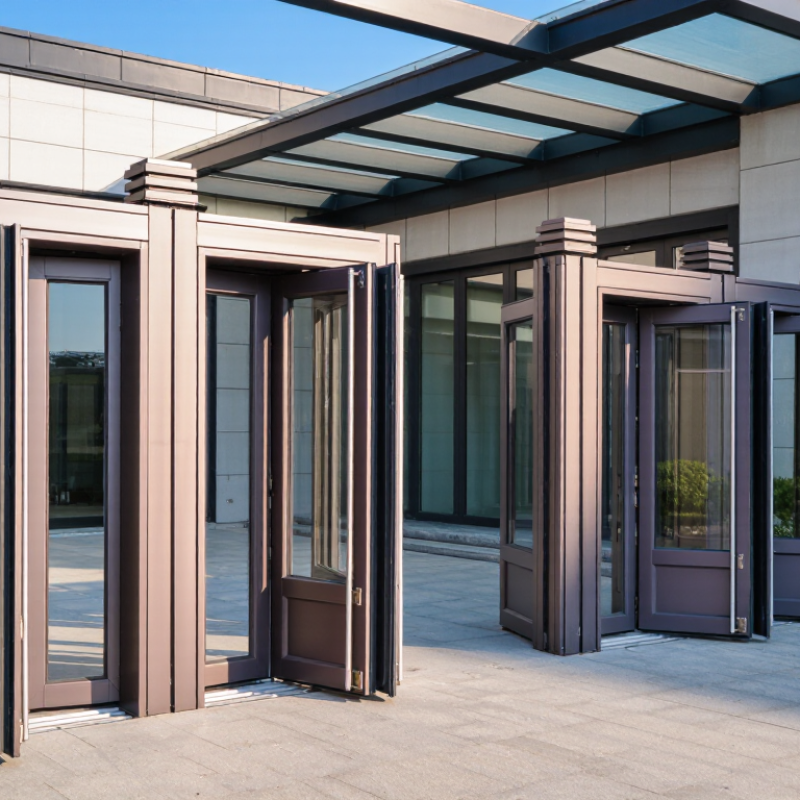
Exterior pivot doors from China are available in several practical types, each suited to different building conditions. Aluminum pivot doors are popular for modern homes because they resist moisture, insects, and surface corrosion. Their slim frames also allow wider glass panels and stronger daylight connections.
Steel pivot doors provide a heavier appearance and excellent structural stability. They suit villas, hotels, and commercial entrances exposed to strong wind. However, steel needs careful protective coatings and proper drainage details. Without them, small scratches may become maintenance problems. That is easy to overlook.
Timber pivot doors create warmth and visual depth. Engineered wood is often more stable than solid boards in changing outdoor temperatures. It still requires exterior-grade finishes and regular inspections around the lower edge. Some projects combine timber with aluminum cladding, reducing weather exposure while keeping a natural interior surface.
Glass pivot doors use large insulated panels with aluminum or steel frames. They work well at garden entrances, patios, and reception areas. Low-emissivity glass can improve comfort, but glass alone does not solve heat gain. Orientation matters.
Thermally broken aluminum models are a strong choice for colder or hotter regions. The internal barrier limits heat transfer through the frame. For coastal sites, specify corrosion-resistant hardware and tested seals. Not every attractive door performs equally well outdoors. Check load ratings, water resistance, wind testing, hinge adjustment, and installation drawings before ordering. A small installation error can affect smooth movement, sealing, and long-term reliability.
Exterior pivot doors made in China increasingly combine slim profiles with serious structural engineering. Aluminum is common because it resists moisture, insects, and dimensional movement. A thermal break reduces heat transfer through the frame. This matters when the door faces strong sun or cold wind. Stainless steel pivot hardware supports heavy leaves, but hinge capacity must match the finished glass and panel weight. Oversized doors often need reinforced head tracks and floor plates.
Glazing also controls comfort. Low-emissivity double glazing can reduce radiant heat, while laminated glass improves impact safety and sound control. The 2024 Global Status Report for Buildings and Construction from the IEA and UNEP states that buildings consume about 32% of global energy. Poorly sealed doors add avoidable demand. Look for tested air leakage, water penetration, and structural performance under ASTM E283, ASTM E331, and ASTM E330. Chinese projects may also reference GB/T 7106. Certification alone is not enough. Installation decides much of the result.
Tips: Specify drainage, adjustable seals, and a threshold suited to local rainfall. Ask for test reports, not only catalog claims. Check the slab tolerance before ordering. A small alignment error can cause rubbing, leaks, or weak locking. I would also question extremely thin frames; they look elegant, but stiffness may suffer. Performance should come before appearance, though real projects sometimes compromise.
When choosing a China pivot door for exterior use, climate should guide the specification, not appearance alone. In humid coastal areas, select marine-grade stainless steel hardware and protected drainage channels. Salt air attacks unsealed fasteners quickly. Use laminated, low-emissivity glass when heat, storms, or street noise matter. A thermally broken frame can reduce condensation during cold mornings. However, thermal performance depends on installation, not the frame alone.
Cold regions need insulated cores, compression seals, and a threshold that limits drafts without trapping water. In hot climates, a deep overhang, shaded glass, and a lighter exterior finish can lower solar gain. For windy sites, ask for tested air, water, and structural performance at the project’s design pressure. Do not rely on a generic “heavy-duty” label. Door size, glass weight, hinge position, and surrounding walls all change the load. This is where many attractive specifications become vague.
Building use also matters. A private entry may prioritize wide openings and tactile movement, while a hotel or apartment entrance needs controlled closing, durability, accessibility, and easy maintenance. For exposed commercial doors, choose replaceable seals, adjustable pivots, and documented corrosion testing. Confirm local code requirements with the project architect or engineer. One practical mistake is oversizing the leaf for visual impact. It can increase sag, closing force, and service calls. Smaller is sometimes wiser. Review shop drawings, drainage details, and warranty exclusions before production. Details are easy to overlook.
For exterior projects, China-made pivot doors should be judged by security, thermal performance, and weather resistance rather than appearance alone. A well-designed aluminum door usually includes a reinforced frame, concealed pivot hardware, and a multipoint locking system. Laminated safety glass adds protection because it remains bonded after impact. However, a large glass panel can still create privacy and heat-gain concerns. Check the glass specification carefully.
Energy efficiency depends on the complete door assembly. Look for thermally broken aluminum profiles, insulated low-emissivity glass, and continuous compression seals. Ask for tested U-values and air-leakage results, not general claims. The threshold also matters. A poorly sealed threshold can admit cold air, dust, and rainwater. Small details matter.
Weather resistance needs practical verification. Reliable suppliers should provide independent test reports for air infiltration, water penetration, and wind pressure. Stainless steel hardware is preferable in coastal or humid areas, but it still needs maintenance. Proper drainage beneath the sill is essential. I have seen attractive doors fail because installers ignored the surrounding wall flashing. That mistake is expensive. Local building codes, wind exposure, and installation quality should guide the final selection. A door may perform well in a factory test, yet perform poorly when the opening is uneven or the seals are compressed incorrectly. Inspect the frame, gaskets, glass edges, and lock alignment before accepting the installation.
| Exterior Pivot Door Configuration | Typical Door Material | Security Potential | Energy-Efficiency Characteristics | Weather-Resistance Characteristics | Typical U-Factor Range* | Best Exterior Applications | Key Specification Checks |
|---|---|---|---|---|---|---|---|
| Thermally Broken Aluminum Pivot Door | Powder-coated or anodized aluminum frame with insulated glass and a thermally separated core | High when tested Strong frame, multi-point locking, reinforced pivot hardware, and laminated glass can provide a robust security package. |
Thermal breaks reduce conductive heat transfer. Low-emissivity double or triple glazing improves insulation and solar control. | High Aluminum resists rot and corrosion when correctly finished; drainage paths and compression seals are essential. |
Approximately 0.20–0.35 Btu/h·ft²·°F for a complete glazed assembly, depending on frame, glass, size, and testing. | Modern houses, coastal regions, hot climates, and large glazed entrances requiring slim sightlines. | Look for air, water, structural, and forced-entry test results; verify finish class, drainage design, glass type, and threshold height. |
| Fiberglass Composite Pivot Door | Fiberglass-reinforced door slab with insulated core and weather-resistant frame | Good to high Performance depends on slab reinforcement, lock reinforcement, hinge or pivot anchoring, and impact-resistant glazing. |
Insulated cores generally offer stable thermal performance and reduce heat transfer compared with solid metal slabs. | High Does not rust or rot, and it handles moisture and temperature changes well when seals and finishes are maintained. |
Approximately 0.15–0.30 Btu/h·ft²·°F for a complete insulated assembly; glazing and frame design can change the result substantially. | Humid, rainy, or mixed climates; residential entrances where low maintenance is important. | Check water penetration testing, seal continuity, impact resistance, core insulation, sill drainage, and resistance to ultraviolet exposure. |
| Engineered Timber Pivot Door | Multi-layer engineered wood, commonly protected with exterior coatings and combined with insulated glass | Good when reinforced Solid construction can provide substantial mass, but the pivot area and lock-side reinforcement must be designed for the door weight. |
Wood has relatively low thermal conductivity. An insulated core, tight seals, and correctly fitted frame improve overall performance. | Good with maintenance Performance depends heavily on edge sealing, overhangs, coating maintenance, and protection from standing water. |
Approximately 0.15–0.35 Btu/h·ft²·°F for an insulated door system; large glazing areas may increase the whole-unit U-factor. | Covered entrances, temperate climates, and projects prioritizing natural appearance and thermal comfort. | Confirm moisture content, four-edge sealing, coating warranty, threshold drainage, local exposure conditions, and annual finish-maintenance requirements. |
| Insulated Steel Pivot Door | Galvanized or coated steel skins with a polyurethane or similar insulated core | High when reinforced Steel offers strong resistance to impact, but the lock block, pivot hardware, frame anchoring, and glazing must be engineered as one system. |
Insulated cores improve performance, while thermal breaks are needed to reduce cold bridging through the steel skin and frame. | Moderate to high Durable in many conditions, but exposed scratches, unprotected edges, and poor drainage can lead to corrosion. |
Approximately 0.15–0.30 Btu/h·ft²·°F for an insulated, thermally improved assembly. | High-traffic entrances, security-focused residences, cooler climates, and locations requiring a durable door leaf. | Verify corrosion protection, galvanized or stainless components, thermal-break details, impact testing, lock reinforcement, and water-shedding threshold design. |
| Aluminum-Clad Timber Pivot Door | Interior engineered timber protected externally by a weather-resistant aluminum cladding system | Good to high Performance depends on the structural timber core, reinforced hardware zones, multi-point locking, and tested glazing package. |
Combines the insulating properties of timber with an exterior cladding layer; high-performance glazing can improve whole-unit efficiency. | High Exterior cladding reduces direct exposure of the timber, while ventilated joints and drainage protect the assembly. |
Approximately 0.15–0.30 Btu/h·ft²·°F for a complete insulated assembly, subject to size and glass configuration. | Rainy or variable climates, premium residential entrances, and projects needing both natural interior finish and exterior durability. | Check cladding joints, thermal expansion allowances, drainage, timber protection, air-seal continuity, and compatibility between metal and wood components. |
| High-Performance Glazed Pivot Door | Thermally improved aluminum or composite frame with low-emissivity insulated glazing | Good when specified Laminated or tempered-laminated glass, concealed reinforcement, secure locks, and tested hardware are important for large glazed panels. |
Double or triple insulated glazing, warm-edge spacers, low-emissivity coatings, and solar-control glass can reduce heat loss and unwanted solar gain. | Good to high Weather performance depends more on seals, sill drainage, panel deflection control, and installation than on glass alone. |
Approximately 0.20–0.40 Btu/h·ft²·°F for the complete door assembly; the frame-to-glass ratio strongly affects the result. | Sun-facing façades, modern architecture, panoramic entrances, and mild-to-hot climates requiring daylight and solar management. | Specify glass safety classification, solar heat gain coefficient, visible transmittance, air leakage, water penetration, structural pressure, and forced-entry testing. |
*Typical U-factor values are indicative ranges for complete exterior door assemblies, not guaranteed product ratings. Actual results vary with door dimensions, frame design, glazing percentage, threshold, hardware, installation quality, and local testing requirements. Lower U-factor values indicate better thermal insulation. Security and weather-resistance performance should be confirmed through documented whole-assembly testing rather than material selection alone.
For exterior use, top China pivot doors should be judged by construction, not appearance alone. A properly engineered door needs a reinforced frame, corrosion-resistant hardware, weather seals, and a stable pivot system. In coastal areas, stainless steel components and protective finishes are especially important. The wall opening must also support the door’s weight. A weak header can cause movement, rubbing, or uneven gaps.
Installation requires careful measuring before the frame is fixed. The sill should remain level, while flashing and drainage direct rainwater away from the interior. Installers should check the pivot axis with a laser or long spirit level. Even a few millimeters of error can make a large door swing poorly. I once saw a beautiful door installed without enough clearance for floor expansion. It worked at first, then began scraping during humid weather. That mistake was avoidable.
Maintenance is simple, but not optional. Clean the seals and frame with mild soap every few months. Remove grit from the pivot area, and inspect fasteners twice yearly. Lubricate approved moving parts, but avoid products that attract dust. With sound installation and regular care, many exterior pivot doors can serve for 15 to 25 years. Harsh sunlight, salt air, strong wind, and neglected drainage may shorten that period. Service life is an estimate, not a promise.