
Choosing the best Light Poles Outdoor solution begins with the site, not the product catalog. A pathway beside a coastal promenade needs different protection than a quiet garden or sports entrance. Measure the mounting area, walking routes, wind exposure, and surrounding trees. Then decide what people must see clearly. A pole that looks elegant at noon may create harsh glare after sunset.
Lighting designer Janet Lennox Moyer offers a useful principle: “Good lighting is about what you see, and what you do not see.” Her point matters when comparing pole height, beam spread, color temperature, and shielding. Taller poles can cover wider areas, but they may appear oversized near low buildings. Shorter poles feel comfortable, yet they can leave dark gaps. There is no universal “best” height.
Look for corrosion-resistant aluminum or galvanized steel, sealed LED housings, stable foundations, and accessible drivers. Check wind-load ratings and local installation requirements before ordering. Review photometric data instead of trusting bright product photographs. Ask whether replacement parts will remain available five years later. That question is often missed.
A reliable selection also considers maintenance. Can technicians reach the fixture safely? Will water collect inside the base? Does the finish suit nearby stone, timber, or planting? Small details become expensive outdoors. I would also reconsider decorative features that add beauty but complicate repairs. The strongest Light Poles Outdoor choice balances visibility, comfort, durability, energy use, and the site’s real character. It should quietly serve people, not compete with the night.
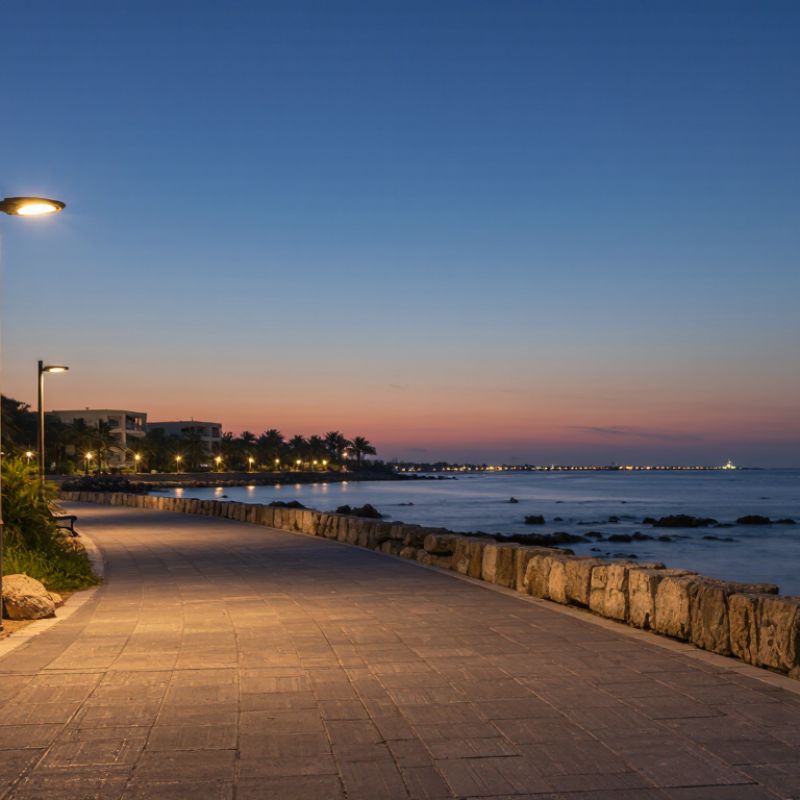
Before choosing outdoor light poles, define what your space must accomplish after sunset. A driveway needs clear vehicle visibility, while a garden path needs gentle guidance. A seating area may require warmer, lower-level light for comfortable conversation. Safety comes first. Walk through the property at night and note dark steps, blind corners, uneven paving, and entrances hidden from view.
Measure the area, pole height, mounting position, and distance between fixtures. Measure twice. A simple site sketch can reveal whether light will reach the ground or shine into nearby windows. Use stronger illumination only where tasks demand it. Excessive brightness can create glare, deep shadows, and unnecessary energy use. I once selected poles by appearance alone, then discovered that their light missed a frequently used walkway. The mistake was avoidable.
Consider color temperature, beam spread, weather exposure, and control methods together. A warm white tone often suits patios and residential paths, while a clearer tone may help identify obstacles near gates or parking areas. Choose poles with suitable corrosion resistance for local conditions, especially near salt air or frequent rain. Confirm wiring, grounding, pole foundations, and spacing with a qualified professional. Local electrical and light-pollution requirements also matter. Motion sensors, timers, or dimming controls can reduce wasted light, but poorly adjusted sensors may activate constantly. Review the plan from a neighbor’s window, too. Your property should feel visible, not intrusive.
| Lighting Need | Recommended Specification | Typical Design Range | Selection Considerations |
|---|---|---|---|
| Residential pathways and gardens | Low-glare pedestrian lighting with shielded optics | 1.5–3 m pole height; 5–20 lux average maintained illuminance | Choose compact poles, warm white light around 2700–3000 K, and downward light distribution to reduce glare and light trespass. |
| Public walkways and plazas | Uniform pedestrian-scale lighting | 3–6 m pole height; approximately 10–30 lux average maintained illuminance | Use wide, controlled beam patterns and spacing based on photometric calculations rather than pole height alone. |
| Parking lots | Pole-mounted area lighting with glare control | 6–12 m pole height; approximately 5–30 lux depending on use and safety requirements | Consider pole placement, uniformity, mounting-arm length, spill light, and vehicle impact protection. |
| Residential streets | Roadway lighting with controlled forward distribution | 6–10 m pole height; typically 5–15 lux average maintained illuminance | Match the optical distribution to road width and pole arrangement. Avoid excessive upward light and direct view of the LED source. |
| Commercial roads and entrances | Higher-output lighting with strong uniformity | 8–12 m pole height; approximately 10–30 lux depending on traffic and activity | Select poles and foundations for heavier luminaires, higher wind loads, and longer operating hours. |
| Sports courts and recreational areas | High-uniformity floodlighting with precise aiming | 6–18 m pole height; approximately 75–500 lux depending on sport and competition level | Use glare shields, robust brackets, low-flicker luminaires, and a lighting layout designed for the specific sport. |
| Coastal or high-humidity locations | Corrosion-resistant pole and hardware system | Hot-dip galvanized steel, aluminum, or other approved corrosion-resistant construction | Specify sealed access doors, stainless or corrosion-resistant fasteners, drainage, and a suitable protective coating system. |
| Rain, dust, and outdoor exposure | Weather-resistant luminaire and electrical enclosure | IP65 or higher for exposed outdoor luminaires; select the rating according to the installation environment | IP ratings address dust and water ingress. Confirm the rating for the complete luminaire, connectors, and control equipment. |
| Vandal-prone public areas | Impact-resistant luminaire and tamper-resistant access | IK08–IK10 impact protection where appropriate | Verify the IK rating of the luminaire, not just the pole. Consider concealed fasteners and lockable maintenance doors. |
| High-wind or exposed sites | Structurally engineered pole, arm, base plate, and foundation | Wind design must be calculated for the local basic wind speed, terrain, height, luminaire area, and weight | Do not select a pole from height alone. Request structural calculations and verify local building-code requirements. |
| Energy-efficient operation | LED luminaire with scheduled or sensor-based controls | Use dimming, photocells, timers, motion sensors, or network controls as the site requires | Controls can reduce operating hours and output, but settings should preserve safety, visibility, and required illuminance. |
| Visual comfort and environmental control | Low-glare, well-shielded, downward-directed lighting | Typically 2700–4000 K for outdoor applications, subject to local requirements | Use the lowest practical color temperature, minimize uplight, and confirm compliance with local dark-sky or light-pollution rules. |
| Maintenance and service access | Durable finish with accessible electrical components | Plan for periodic cleaning, inspection, tightening, and electrical testing | Select replaceable components, secure cable routing, lockable access doors, and a finish suitable for the local environment. |
Note: Illuminance ranges are general planning values. Final pole height, spacing, luminaire output, optics, structural design, and foundation dimensions should be confirmed through a site-specific photometric and engineering assessment.
Material selection affects strength, maintenance, appearance, and service life. Galvanized steel offers strong wind resistance and suits tall roadway poles. Its zinc coating protects against rust, but damaged areas need inspection. Aluminum is lighter and naturally corrosion resistant. It works well near coastal paths, though it may require a larger diameter for equal stiffness. Concrete poles resist impact and fire, but transportation and installation can be difficult. Fiberglass poles are lightweight and nonconductive, yet their long-term surface aging deserves careful review.
Structural design matters as much as material. Tapered round poles reduce wind pressure smoothly and create a clean appearance. Octagonal steel poles often provide practical strength with efficient fabrication. Square poles can match modern sites, but their corners may collect dirt and moisture. Direct-burial poles simplify installation, while base-plate designs make replacement easier. The foundation must match soil conditions, pole height, fixture weight, and local wind requirements. Never judge safety by pole thickness alone.
During site reviews, I check coating damage around doors, bolts, and welds. Small cracks can become expensive problems. A heavier pole is not automatically safer. It may overload the foundation or complicate transport. Engineers should verify wind loads, vibration, fatigue, and drainage using applicable local standards. One detail is easy to miss: decorative fixtures can catch more wind than expected. I have seen specifications change after measuring the actual fixture, not the catalog drawing. That extra check can prevent a poor decision.
Pole height controls coverage, glare, and visual comfort. For walkways, 3–5 meter poles often provide human-scale illumination. Parking areas may require 6–10 meters, depending on spacing and mounting geometry. The Illuminating Engineering Society recommends evaluating illuminance, uniformity, and glare together, rather than selecting height alone. Measure first.
Fixture type should match the task. Full-cutoff fixtures help reduce upward light and protect nearby windows. Shielded optics also improve visibility near entrances, paths, and loading zones. CIE 150:2017 identifies glare and light trespass as important environmental considerations. A decorative fixture may look attractive, but its distribution can be inefficient. I have seen beautiful poles create dark walking zones.
Light output should follow the site plan, not a guessed lumen number. The U.S. Department of Energy’s 2023 Solid-State Lighting report notes that many modern outdoor LED luminaires exceed 100 lumens per watt under suitable conditions. Higher output is not automatically better. Over-lighting wastes energy and can reduce comfort. Check mounting height, beam angle, surface reflectance, and spacing together. Reassess after installation; real conditions often differ from the calculation.
Choosing an outdoor light pole starts with its exposure, not its appearance. NOAA’s Storm Events Database shows how wind, flooding, and severe storms repeatedly damage outdoor infrastructure. Check the site’s wind speed, soil condition, drainage, and nearby trees before selecting a pole. ASCE 7-22 provides wind-load criteria for structural design. A taller pole needs stronger foundations and more precise calculations.
Weather resistance also depends on every component. IEC 60529 rates enclosure protection, but an IP65 rating only addresses dust and water jets. It does not guarantee resistance to salt spray, impact, or ultraviolet damage. For coastal sites, request corrosion-resistant materials and verify coating performance through documented testing. Small gaps around cable entries can invite moisture. That mistake is easy to miss.
Safety continues during installation. The National Electrical Code requires suitable grounding, wiring protection, and listed equipment for the installation environment. Confirm the pole’s weight, lifting points, anchor-bolt pattern, and foundation depth before delivery. A qualified engineer should review structural calculations, especially in high-wind regions. Installers also need traffic control, stable lifting equipment, and clearance from energized lines. Do not rely on a generic foundation drawing. Soil varies dramatically between two nearby properties. Rechecking the design may feel excessive, but premature leaning or corrosion costs far more than careful preparation.
This weighted evaluation compares the three key selection areas: weather resistance, safety, and installation requirements. Weather resistance receives the highest weighting because outdoor poles must withstand rain, moisture, wind, corrosion, and temperature changes. Safety includes structural stability, electrical protection, grounding, and visibility. Installation covers foundation design, access for maintenance, site conditions, and compatibility with local regulations.
Energy efficiency should guide pole selection, but it cannot stand alone. The U.S. Department of Energy reports that LED systems can reduce lighting energy use by roughly 50% to 70% compared with older technologies. However, savings depend on optics, operating hours, controls, and installation quality. A poorly aimed fixture can waste energy while leaving pathways dim.
Maintenance often decides the real cost. The U.S. Department of Energy’s Municipal Solid-State Street Lighting Consortium recommends evaluating access, controls, and replacement planning during design. Choose poles with durable coatings, sealed wiring compartments, and easy fixture access. On a coastal site, corrosion-resistant materials may cost more initially. They can reduce repainting, outages, and lift equipment visits. That difference matters.
Think beyond the purchase invoice. The International Energy Agency reports that lighting uses about 15% of global electricity. Efficient equipment can lower operating costs, but controls may create new maintenance points. Photocells, timers, and networked sensors need testing. They also need trained technicians. A lifecycle calculation should include energy, inspections, cleaning, repairs, disposal, and expected service life. A taller pole is not always better. Wind loading, foundation depth, glare, and local weather can change the result. I would also question optimistic payback estimates when electricity prices or maintenance labor remain uncertain.


