China Top Indoor Barn Doors for Global Buyers?

Indoor barn doors have moved from farmhouse accents into homes, hotels, offices, and retail spaces. For global buyers, China offers a broad range of styles, materials, and production options. Yet choosing a supplier takes more than comparing attractive product photos. A door may look sturdy online, but its real performance depends on the panel, track, rollers, and installation details.

This guide explores China’s indoor barn doors for international buyers, from solid wood and engineered panels to glass inserts and space-saving hardware. It considers practical details such as opening width, wall clearance, finish consistency, packaging, and supplier communication. Ask for clear specifications and recent product images. Check how components fit together. Small details matter.

A smooth track should move without rattling, while the door should sit level and cover the opening as intended. Buyers should also confirm dimensions, available finishes, and what the quoted price includes. These checks do not remove every risk. Samples may differ slightly from bulk production, and installation needs vary by project. That part deserves a closer look. By weighing design against durability and documented specifications, buyers can compare manufacturers with greater confidence and find indoor barn doors suited to their market, budget, and space.
China Top Indoor Barn Doors for Global Buyers?

What Indoor Barn Doors Are and How They Work

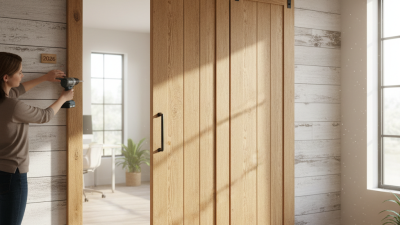
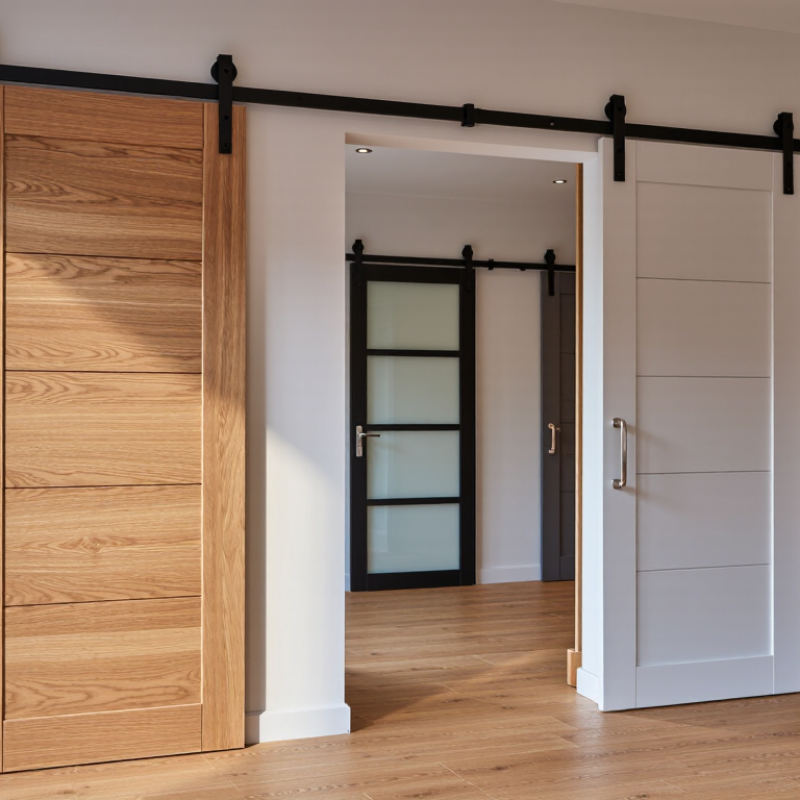
An indoor barn door is a sliding panel suspended from a track above a doorway. Rollers carry the panel along the track, while a small floor guide helps keep it from swinging. To open it, you slide the panel sideways until it rests beside the opening. No hinge arc is needed. That can help in a tight bedroom or pantry.

The system needs clear wall space beside the doorway, plus a secure fixing surface above it. Installers should check the track’s load rating, panel weight, wall framing, and opening dimensions before fitting. A level track matters; even a slight slope can make the door drift. That detail is easy to miss. Unlike a hinged door, a barn door usually leaves gaps around the opening, so it offers limited sound and light control. It may not suit rooms where privacy is essential.

Renovation data gives useful context, but not a reason to overstate demand. The 2024 Houzz & Home Study reported a median U.S. renovation spend of $24,000 in 2023. That figure covers whole-home projects, not barn doors specifically. For global buyers, local wall construction and available side clearance can change installation needs. A photo alone rarely reveals those constraints. Measure the opening and the wall beside it.

China Top Indoor Barn Doors for Global Buyers: What Indoor Barn Doors Are and How They Work

Estimated Panel Width for Common Clear Opening Examples

A sliding barn door hangs from a track and moves across the wall to cover a doorway. This chart estimates panel width by adding 1 inch of overlap on each side of the clear opening. Check the finished opening, trim, wall space, and hardware requirements before choosing a door.

Main Types of Indoor Barn Doors Made in China

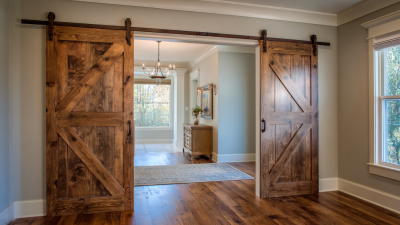
Indoor barn doors made in China commonly include single-panel sliding doors, double sliding doors, bypass doors, and folding designs. A single panel suits a bedroom or study where wall space is clear. It slides along a visible rail and needs no floor swing. A simple choice. Double doors can open a wider passage, while bypass panels slide past each other in compact closets. Folding models fit tighter openings, though their hinges and tracks need careful adjustment.

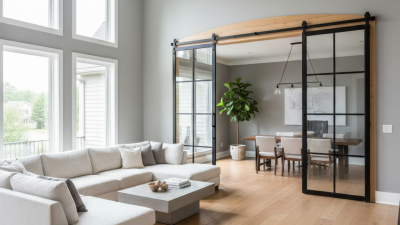
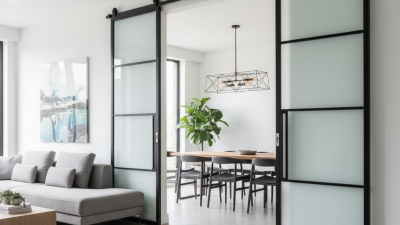
Construction varies by supplier. Engineered wood panels often provide a stable, paint-ready surface; solid timber versions show natural grain but may respond more to humidity. For brighter interiors, some designs combine glass inserts with wood or metal frames. Frosted glass softens views without blocking all daylight. Metal hardware also matters: check track thickness, roller material, door weight limits, and whether the rail is supplied at the required length. A lovely panel can still slide poorly on weak hardware.

Before ordering, measure the opening and the clear wall beside it, including baseboards and nearby switches. Ask for panel thickness, finish samples, installation instructions, and packing details. These checks sound fussy, but they prevent avoidable surprises. Product descriptions may use “barn door” loosely, so confirm whether the design is surface-mounted, bypass, or folding. And allow for some variation in finish color between a sample and a larger production batch.

Materials, Hardware, Sizes, and Customization Options

Indoor barn doors are often chosen for their clean look, but the materials affect weight, upkeep, and sound. Solid wood feels substantial and shows natural grain, though seasonal movement can affect alignment. Engineered wood is often lighter and more consistent. Frosted glass can bring light into a dim hallway, but it needs careful handling. Measure twice. Check the wall structure before choosing a heavy door; the track and fasteners must support its actual weight, not just its appearance.

Hardware deserves equal attention. A sturdy track, smooth rollers, end stops, and a floor guide help control movement. Soft-close parts can reduce slamming, though they add cost and need compatible hardware. Small details matter. Measure the opening, available wall space, and nearby switches or trim. The door usually needs enough width to overlap the opening, while its height must leave suitable floor clearance. Exact sizing depends on the layout, so confirm dimensions with the installer or supplier before ordering.

Custom options may include panel styles, finishes, glass inserts, handle shapes, and made-to-measure dimensions. A dark finish can highlight a pale wall, but fingerprints may show more clearly. That trade-off is easy to miss in a small sample. Ask for the door’s finished weight, track length, and required clearance in writing, then compare those details with your room measurements.

How Global Buyers Can Evaluate Chinese Barn Door Suppliers

A barn door supplier should be judged on more than finish options and catalogue photos. Ask for drawings with opening dimensions, track length, panel thickness, and hardware load ratings. Request the test method behind any cycle-life claim. A sample reveals much. Check its edge banding, surface finish, and the smoothness of the rollers by hand.

Grand View Research estimated the global doors market at USD 152.5 billion in 2023, with projected annual growth of 5.4% through 2030. The World Green Building Council’s 2019 Global Status Report attributed 11% of global energy-related carbon emissions to building materials and construction. These figures do not prove a barn door’s performance. They do show why buyers should ask about material specifications and finish documentation, not just price.

Compare supplier quotations using the same panel size, hardware set, packing method, and delivery terms. Ask for recent production photos, batch inspection records, and packaging details; a metal track should arrive protected from scratches and bending. Verify lead times against a written production schedule. No file is perfect. A complete document set still cannot guarantee a smooth shipment, so check how the supplier handles damaged samples or specification changes.

China Top Indoor Barn Doors for Global Buyers? - How Global Buyers Can Evaluate Chinese Barn Door Suppliers
Evaluation Dimension What to Check Practical Buyer Benchmark Evidence to Request Buyer Assessment
Door construction Identify whether the door is solid wood, engineered wood, hollow-core, or a mixed construction. Check the core, stiles, rails, veneer, and edge treatment. Construction should match the intended use, expected weight, finish, and budget. A product description should state the main materials rather than use only terms such as “solid” or “premium.” Cross-section or construction drawing, material specification, and a sample or detailed product photographs. Record material and confirm it matches the quotation.
Dimensions and tolerances Confirm door width, height, thickness, permitted dimensional variation, and whether custom sizing is available. Compare the finished door dimensions with the project opening and installation plan. Agree on tolerances in writing; do not assume every supplier uses the same limits. Dimensioned drawing, approved sample measurements, and written inspection tolerances. Pass / Review / Not confirmed
Track and opening layout Check track length, mounting method, door overlap, floor clearance, and the wall space required beside the opening. A common planning rule is to use a track around twice the door width for a single-door installation, but the final length depends on the opening, overlap, and hardware design. Confirm the actual layout before ordering. Installation drawing showing the opening, track, door travel, fixing points, and required clearances. Verify against the site dimensions.
Hardware and load rating Review rollers, track, stops, anti-jump devices, floor guides, fasteners, and the rated door weight for the complete hardware set. The stated hardware capacity should exceed the actual door weight and be suitable for the specified mounting surface. A load rating for one component alone does not establish the capacity of the complete installation. Hardware specification, installation instructions, rated load information, and compatible door-weight range. Confirm complete-system compatibility.
Finish and color consistency Specify paint, stain, veneer, sheen, edge finish, and the acceptable appearance of natural grain or color variation. Approve a physical finish sample under suitable lighting. Natural wood and veneer can vary in grain and tone; define acceptable variation before production. Finish sample, finish schedule, and written approval record. Sample approved / Sample required
Moisture and intended location Ask about material conditioning, moisture-related movement, and suitability for the room where the door will be installed. Indoor barn doors are not automatically suitable for bathrooms or other persistently humid locations. Confirm the product’s environmental limitations and follow the supplier’s installation and care instructions. Material and care guidance, recommended humidity conditions, and any available test information. Match product to installation environment.
Safety and functional limits Check pinch-point risks, soft-close options, anti-jump protection, edge details, and the door’s ability to stay on its track. Confirm the supplied configuration includes the safety components required by the project. Do not treat an accessory option as included unless it appears in the purchase specification. Hardware list, product drawings, installation instructions, and test or inspection records where applicable. List required safety features in the order.
Compliance and documentation Identify applicable destination-market requirements for materials, finishes, labeling, and product documentation. Requirements differ by country and project. Request documents relevant to the actual product and destination; a general certificate may not prove that a specific door or finish complies. Applicable test reports, declarations, material information, and traceable product or batch references. Check against destination-market requirements.
Quality control Ask how the supplier checks dimensions, surface defects, finish, hardware completeness, and packaging before dispatch. Agree on inspection criteria and defect limits before production. A pre-shipment inspection can verify the order against the approved specification. Quality-control checklist, inspection photos or report, and approved reference sample. Inspection plan agreed / Not agreed
Packaging and export handling Review protection for corners, faces, edges, and hardware, plus carton or crate markings and shipping-unit dimensions. Packaging should protect the door against handling and transit damage and suit the selected transport method. Confirm packing dimensions and gross weight for freight planning. Packing specification, package photos, packing list, and confirmed dimensions and weights. Confirm packaging before shipment.
Commercial terms and lead time Clarify minimum order quantity, sample charges, production schedule, payment terms, shipping terms, and responsibility for freight and import charges. Compare quotations on the same product specification and delivery basis. Treat lead time as an estimate until the supplier confirms it against the approved order and production schedule. Itemized quotation, written order confirmation, production timeline, and agreed delivery terms. Compare like-for-like quotations.
Communication and after-sales support Evaluate response clarity, drawing revisions, spare-parts availability, installation support, and the process for handling defects or transit damage. Use written, version-controlled specifications and confirm response and claim procedures before placing the order. Named contact role, revision-controlled documents, warranty terms, and written claims procedure. Support terms documented / Pending
Overall supplier decision Compare product fit, technical evidence, quality controls, export readiness, and total landed cost. Shortlist suppliers only after checking samples or equivalent product evidence, confirming the full specification, and reviewing the delivery and compliance requirements for the destination. Completed evaluation records, approved specification, quotation comparison, and inspection plan. Shortlist / Request clarification / Do not proceed

Note: Benchmarks are general purchasing guidance, not universal product standards. Confirm dimensions, ratings, documentation, and installation requirements for the specific product, project, and destination market.

Ordering, Shipping, and Importing Indoor Barn Doors from China

Ordering indoor barn doors from China starts with measurements, not catalog photos. Send the opening width, finished height, wall clearance, and track length. Confirm whether the price includes rollers, floor guides, handles, and mounting screws. Ask for a packed-door measurement and gross weight; these affect freight quotes. Small details matter. Request photos of corner protection and carton labels before production. A sample can reveal finish and hardware quality, but it cannot prove every production unit will match. Put approved specifications, tolerances, lead time, and packaging requirements in the purchase order.

Shipping time needs a buffer. UNCTAD’s Review of Maritime Transport 2024 reported that global maritime trade volume grew 2.4% in 2023. The World Bank’s Logistics Performance Index 2023 reported a median 44 days from port of loading to destination across tracked shipments. That is a broad benchmark, not a door-specific transit promise. Confirm the route, port handling, delivery terms, cargo insurance, and who handles customs entry with your freight forwarder. Ask for the commercial invoice, packing list, and transport document before dispatch. A missed document can delay arrival. Import duties and product requirements vary by destination, so check the correct tariff classification with a qualified customs broker. One weak spot: schedules and estimates can change, even with careful planning.