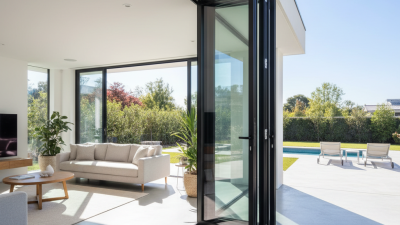
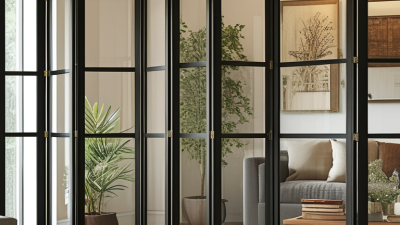
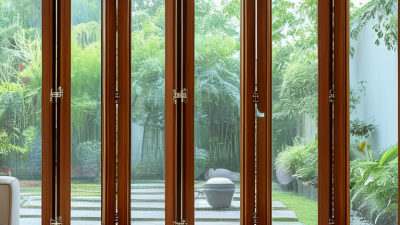
Choosing reliable glass bifold doors suppliers in China requires more than comparing photographs and factory prices. This guide examines ten established manufacturers serving residential, commercial, and hospitality projects. It considers product quality, engineering support, production experience, and export reliability. The selection does not represent a universal ranking. Project requirements can change the best choice.
Practical evaluation starts with the door system itself. Important details include aluminum alloy thickness, thermal breaks, glass configuration, drainage design, hinge strength, and roller performance. A well-designed panel should move smoothly without scraping or excessive force. Small details matter. We also consider weather seals, powder-coating durability, hardware brands, and replacement-part availability. Factory capabilities, sample quality, test reports, and documented project experience provide stronger evidence than attractive marketing language.
Reliable suppliers should communicate clearly about drawings, tolerances, packaging, installation, and delivery schedules. Buyers may also request factory audits, product samples, references, and certification records before placing a large order. However, supplier information can become outdated, and some online claims deserve careful verification. That is an unavoidable limitation. Readers should confirm glass standards, warranty terms, payment conditions, and local building requirements independently. The following overview offers a practical starting point for comparing China’s glass bifold doors suppliers. It aims to support informed decisions, not replace professional architectural, structural, or installation advice.
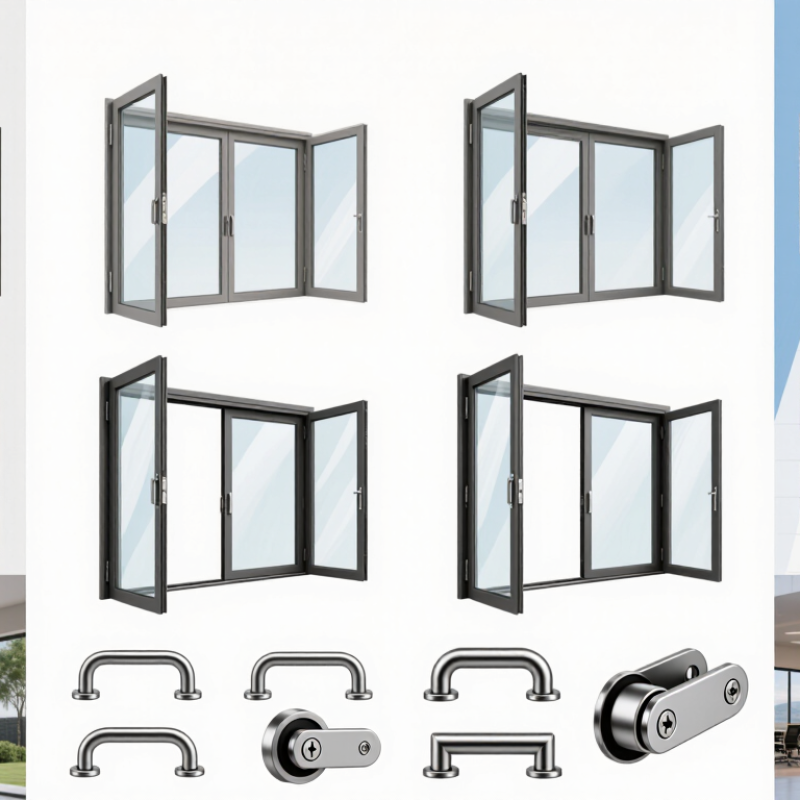
China’s top 10 glass bifold door suppliers may offer similar images, but their specifications can differ sharply. A practical comparison starts with the panels. Four-panel systems suit wider openings, while six-panel layouts create smaller moving sections. Each panel needs accurate alignment. Even a few millimeters can affect smooth operation.
Hardware controls daily performance. Check hinge strength, roller adjustment, handle quality, and locking points. Stainless steel components generally resist humid conditions better. However, installation accuracy matters just as much. I have seen premium hardware perform poorly after an uneven threshold was fitted. That detail is easy to miss.
Glazing affects comfort, safety, and energy use. Double glazing is common, while triple glazing offers stronger insulation but adds weight. Low-emissivity coatings can reduce heat transfer. Gas-filled cavities may improve thermal performance. Ask for tested U-values, not vague claims. Thermal ratings should match the local climate and frame design. A strong glass specification cannot fix weak seals.
Tips: Request drawings, glass thickness, hardware load limits, drainage details, and test reports. Inspect corner joints and gasket compression before approval. Small gaps matter. Also confirm whether replacement rollers and seals remain available. This point is often forgotten. Allow for honest review; a lower quoted price may hide installation or maintenance costs.
China Top 10 Glass Bifold Doors Suppliers
For bifold doors, a U-value below 1.6 W/m²K should be a minimum screening point. The U.S. Department of Energy reports that windows can cause 25–30% of residential heating and cooling energy use. Poorly insulated folding panels may increase this loss through glass edges, frames, and moving joints.
Ask each supplier for certified whole-door results, not glass-only figures. Testing should follow EN ISO 10077-1 or an equivalent calculation method. Double glazing may reach the target, but spacer design and thermal breaks remain important. In real projects, the stated value can change.
Air leakage testing deserves equal attention. EN 1026 measures air permeability, while EN 12207 classifies the result. Request the test pressure, leakage rate, product size, and classification. ASTM E283 may also be relevant for projects using North American specifications. A factory video is useful, but it cannot replace an independent laboratory report.
Inspect samples with a pressure gauge and visible seals. Folding hardware must close evenly, without a hard pull or uneven gasket contact. The supplier should explain how corner joints, drainage paths, and lock points were tested. The Passive House Institute uses far stricter window targets, including a U-value around 0.8 W/m²K for certified components, so 1.6 W/m²K is practical, not exceptional. One detail is often missed: repeated opening cycles can affect leakage. Ask for durability records, though many quotations omit them.
China’s top ten glass bifold door suppliers serve residential, hospitality, and commercial projects. Their product ranges commonly include aluminum frames, thermally broken profiles, double glazing, concealed rollers, and low-threshold systems. Product quality varies by configuration, not catalogue photography. A six-panel door with heavy glass needs tested hardware and accurate site measurements.
The International Energy Agency reports that buildings consume about 30% of global final energy and create roughly 26% of energy-related emissions. This makes thermal performance important when comparing suppliers. Buyers should request U-values, air-leakage results, water-tightness data, and wind-load testing. Relevant documentation may include ISO 9001 quality systems, China’s GB/T 8478 requirements, EN 14351-1 test evidence, or ASTM reports for North American projects. Certification alone is not proof of installation performance.
Export markets differ. European buyers often focus on CE-related compliance, glazing safety, and declared performance. North American projects usually require project-specific testing, pressure ratings, and local installation details. Middle Eastern buyers may prioritize solar control, corrosion resistance, and large opening sizes.
According to the World Bank, China remains one of the world’s largest manufacturing and merchandise-export economies, supporting broad supply capacity. Still, capacity is not consistency. Some suppliers provide excellent samples but weaker after-sales records. Ask for recent project references, packing photographs, replacement-part policies, and test reports matching the exact door series. Shorter lead times can hide unfinished quality checks.
Comparing China’s top ten glass bifold door suppliers requires more than reviewing catalog photographs. In practice, panel width often separates a smooth installation from a difficult one. Most projects need a measured balance. Ask for finished opening drawings, not only maximum sizes. Wide panels reduce frame lines, yet they demand stronger rollers, hinges, and tracks. Confirm the tested load capacity for the complete panel assembly. Do not rely on a hardware rating alone.
Glass thickness affects weight, thermal performance, and operating effort. Common configurations may use tempered or laminated glass, while insulated units add further weight. A thicker pane is not automatically safer or better. Check glass type, edge treatment, spacer design, and certified performance documents. Coastal sites, large openings, and windy elevations require closer engineering review. Small calculation errors can create noticeable sagging or difficult closing.
Warranty terms reveal how confidently a supplier supports its system. Compare coverage for frames, hardware, glass seals, surface finishes, and replacement parts. Also check whether the warranty begins at shipment, delivery, or installation. A ten-year frame warranty may exclude rollers after one year. That detail matters. Request written exclusions, maintenance requirements, and response times. Some suppliers provide impressive documents but weak after-sales coordination. This is easy to overlook. A dependable comparison should include factory inspection, sample testing, packaging quality, and communication during technical changes. Pricing alone remains an incomplete measure.
This anonymous benchmark compares commonly published glass bifold door specifications: maximum panel width, rated load capacity per panel, insulated glass thickness, and standard warranty period. Values represent realistic market-reference specifications and should be confirmed with the supplier before purchasing.
When comparing China’s top ten glass bifold door suppliers, documentation should lead the conversation, not catalog photos. Ask for an EN 14351-1 performance declaration, test scope, and factory quality records. This standard relates to external pedestrian doorsets, but applicability depends on configuration and market. Check the exact panel size, glazing, hardware, and threshold tested. A report for one system may not cover another. That detail is often missed.
For North American projects, request ASTM E283 air leakage results with test pressure and specimen dimensions. E283 measures air leakage; it does not prove water resistance, structural strength, or installation quality. CE marking also needs careful review. Confirm the applicable European requirements, declaration documents, and assessment route before accepting the mark. Do not treat a logo as independent proof. Verify document numbers with the testing or certification body when possible.
Lead time should be written in stages: engineering approval, glass production, frame fabrication, assembly, and shipping. A quoted “30 days” can hide approval delays. Ask for a realistic production window after final drawings and deposit. MOQ deserves equal scrutiny. Some suppliers accept one project set, while others require repeated panel sizes or full-container quantities. Low MOQs may create higher unit costs through special crating and spare parts. Compare landed cost, replacement glass access, packaging photos, and installation instructions. Leave room for revision; early specifications are rarely perfect.
| Rank | Anonymized Supplier Profile | Typical Product Focus | EN 14351-1 Documentation to Request | ASTM E283 Evidence | CE Marking Position | Typical Lead Time | Typical MOQ | Common Glass Options | Customization Capability | Key Buying Check |
|---|---|---|---|---|---|---|---|---|---|---|
| 01 | Profile A Export-oriented architectural door manufacturer |
Large-span aluminum bifold systems for residential and light-commercial projects | Declaration of Performance where applicable, product specifications, air/water/wind test reports, and installation instructions | Request report ASTM E283 is an air-leakage test method; verify test pressure, specimen size, and laboratory details |
Verify by project Request CE label format, DoP, harmonized-standard basis, and applicable AVCP information |
25–40 working days after drawing and finish approval | 1–3 complete sets for standard configurations; lower quantities may carry setup charges | Double insulated glass, laminated safety glass, low-E options, tempered glass | Opening configuration, panel width, hardware color, glass specification, and threshold options | Confirm maximum tested panel size and the complete performance classification |
| 02 | Profile B Custom fabrication specialist |
Thermally improved bifold doors for villas, apartments, and renovation projects | Product data sheet, factory production-control records, test reports, and installation details relevant to external doorsets | Request project-specific data Check whether the report covers the selected frame, glazing, seals, and configuration |
Conditional CE marking is not a substitute for performance testing; verify applicability to the destination market |
30–45 working days for non-standard sizes or colors | 2–5 sets; one-off prototypes may be accepted with engineering fees | Low-E IGU, acoustic laminated glass, solar-control glass, obscure glass | Thermal breaks, concealed drainage, multi-panel layouts, custom RAL-style finishes | Check U-value calculation assumptions and spacer or edge-seal specification |
| 03 | Profile C High-volume project supplier |
Standardized folding door ranges for housing developments and commercial fit-outs | Request test reports tied to the exact system series, configuration, and declared product characteristics | Available on request Confirm whether air leakage is reported in the units required by the project specification |
Document review required Confirm DoP and labeling obligations for external pedestrian doorsets where applicable |
20–35 working days for repeat designs | 5–10 sets, with better pricing at container or project volume | Tempered IGU, laminated safety glass, clear or tinted glass | Limited panel dimensions, standard hardware packages, repeatable finishes | Verify production capacity, packaging method, and spare-hardware policy |
| 04 | Profile D Premium thermally broken system fabricator |
High-performance residential and hospitality bifold doors | System test reports, thermal calculations, weather-performance results, and installation manual | Request ASTM E283 report Prefer an independent laboratory report for the selected door assembly |
Confirm scope Ask whether CE documentation covers the complete doorset or only individual components |
35–55 working days, including engineering and finish approval | 1–2 sets for standard systems; custom engineering may require a minimum project value | Triple glazing where system design permits, low-E, laminated, acoustic, solar-control | Large panels, corner openings, flush thresholds, enhanced drainage, custom finishes | Check sill design, water-management details, and tested corner conditions |
| 05 | Profile E Mid-market OEM door supplier |
Cost-sensitive aluminum bifold doors for distributors and private-label projects | Request material certificates, hardware schedule, product drawings, and applicable conformity documents | Must be verified Do not rely on a general window report if the bifold door configuration differs |
Check destination requirements Obtain a signed Declaration of Performance when the applicable harmonized route requires it |
25–40 working days after deposit and approved shop drawings | 3–8 sets depending on finish, glass, and packaging requirements | Double glazing, tempered glass, laminated glass, basic low-E configurations | Moderate; custom dimensions and colors usually require confirmation before production | Compare hardware grade, roller load rating, gasket material, and replacement availability |
| 06 | Profile F Export window-and-door factory |
Mixed product lines including bifold, sliding, hinged, and fixed glazed doors | Ask for the exact system name, declared characteristics, test configuration, and factory quality-control procedure | Report required Check that ASTM E283 testing covers the complete assembly and not only a sample section |
Verify product classification CE marking requirements vary according to product and intended application |
30–50 working days for mixed-product orders | 2–6 sets, usually combined with other door or window products | Tempered, laminated, double IGU, low-E, decorative or privacy glass | Broad size and color selection; engineering support varies by project | Ensure all products in one order use compatible profiles, seals, and hardware |
| 07 | Profile G Architectural façade and door specialist |
Oversized openings, façade interfaces, and commercial architectural applications | Request system calculations, structural/wind data, water and air test reports, and interface details | Independent test preferred Confirm laboratory accreditation and test pressure selected for the project |
Project-specific review Confirm whether the product falls under the Construction Products Regulation route in the target market |
45–70 working days for engineered or oversized assemblies | 1 project lot; engineering and mock-up costs may apply | High-performance IGU, laminated safety glass, solar-control, acoustic glazing | High; structural interfaces, custom mullion details, drainage, and special thresholds | Review deflection limits, panel weight, wind-load assumptions, and site measurement responsibility |
| 08 | Profile H Ready-to-install residential supplier |
Standard-size bifold doors for home improvement and small construction projects | Request installation instructions, hardware warranty, product drawings, and available test summaries | Confirm availability Standard residential models may have limited ASTM documentation |
Do not assume CE compliance Request formal documentation rather than relying only on a CE symbol in a catalog |
15–30 working days for stock-based sizes and finishes | 1 set; stock availability and color selection may be limited | Tempered double glazing, clear laminated glass, basic low-E options | Low to moderate; mainly panel count, handle style, glass, and finish selection | Confirm rough-opening dimensions, threshold height, handing, and delivery protection |
| 09 | Profile I Performance-testing-focused manufacturer |
Doors supplied with greater emphasis on laboratory testing and project submittals | Request complete technical file, test specimen description, declared characteristics, and production-control evidence | Strong documentation target Still verify that the test values apply to the ordered dimensions and glazing |
Review DoP and label Confirm the applicable harmonized standard or technical assessment route |
35–60 working days, depending on testing and customization | 1–4 sets; project-specific testing may increase cost and schedule | Acoustic laminated, low-E, solar-control, safety laminated, and insulated glass | High; custom dimensions, performance packages, hardware, and finish combinations | Request a document index before purchase and match every claim to a test or calculation |
| 10 | Profile J Small-batch export fabricator |
Made-to-order bifold doors for boutique residential and renovation projects | Request signed drawings, component specifications, installation guide, and any available conformity records | May be limited Arrange third-party testing if ASTM E283 performance is contractually required |
Buyer due diligence required Confirm whether CE marking is legally applicable to the selected product and destination |
30–50 working days; add time for unusual glass or hardware | 1 set, subject to custom-crating and engineering charges | Tempered, laminated, low-E insulated, tinted, and privacy glass | Flexible dimensions and finishes, but limited repeat-production capacity | Confirm after-sales support, replacement rollers, gaskets, handles, and installation training |