


China Best Spice Rack Organizer Manufacturer?
Choosing the China Best Spice Rack Organizer Manufacturer? requires more than comparing catalogue photos and low prices. A dependable supplier should understand real kitchen problems: narrow cabinets, oily glass jars, uneven shelves, and labels hidden behind taller bottles. The right Spice Rack Organizer must save space without creating daily frustration. It should also remain stable when a cook removes one jar from the middle row.
Professional organizer Julie Morgenstern offers a practical principle: “Organization is not about getting rid of everything you own; it is about finding a place for everything you own.” This idea fits spice storage perfectly. A capable manufacturer should provide adjustable dimensions, smooth pull-out rails, rust-resistant materials, and clear labeling options. Factory experience matters here. Engineers should test load capacity, drawer movement, coating durability, and repeated opening cycles. Small details matter.
However, no manufacturer is perfect. Product pages may show attractive kitchens but hide weak hardware or inconsistent quality. Buyers should request samples, inspection records, material information, and evidence of production control. A serious supplier can explain whether its organizers use stainless steel, powder-coated metal, bamboo, or plastic, and why. It should also describe packaging protection for international shipping. The best choice may not be the cheapest one. It should be the supplier that combines usable design, stable manufacturing, transparent communication, and measurable quality. This guide examines those factors carefully, while recognizing that even a well-designed Spice Rack Organizer may need refinement after real kitchen use.
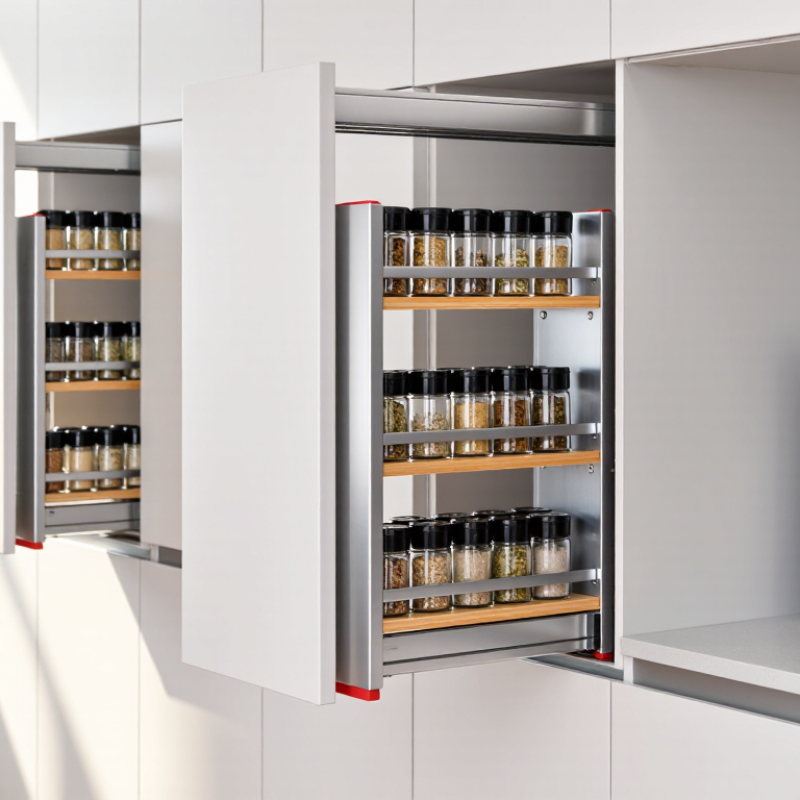
What Defines a Leading Spice Rack Organizer Manufacturer in China
China Best Spice Rack Organizer Manufacturer?
What Defines a Leading Spice Rack Organizer Manufacturer in China
A leading manufacturer turns storage problems into practical kitchen solutions. In factory evaluations, I look beyond polished product photos. The real evidence appears in material selection, production control, and repeatable sampling. A dependable supplier explains whether the rack uses stainless steel, carbon steel, bamboo, or engineered plastic. Each choice affects strength, moisture resistance, cleaning, and cost.
Details matter. A well-made rack should sit level on a shelf and support filled spice jars without bending. Smooth edges reduce handling risks. Accurate drilling keeps wall-mounted models stable. Powder coating should look even, while stainless steel should resist common kitchen humidity. Experienced manufacturers test load capacity, surface adhesion, packaging strength, and assembly fit. They also provide clear drawings, inspection records, and traceable production information.
Communication is another defining factor. A professional team confirms dimensions, jar sizes, colors, carton limits, and delivery requirements before production. It should offer prototypes and accept reasonable revisions. However, no factory gets everything right. A beautiful sample may hide weak packaging or inconsistent batch quality. That is why independent inspections and small trial orders remain valuable. Some buyers focus too heavily on price. I have found that cheaper metal, loose tolerances, or rushed finishing can create higher costs later. Reliable manufacturers welcome questions, admit limitations, and improve through documented corrective action. Their authority comes from evidence, not promises.
China Best Spice Rack Organizer Manufacturer? - What Defines a Leading Spice Rack Organizer Manufacturer in China
| Evaluation Dimension | Practical Benchmark | Why It Matters | Recommended Verification |
|---|---|---|---|
| Material Safety | Food-contact components should be made from materials suitable for food-contact use, such as stainless steel, glass, food-grade plastic, or coated metal. | Spice containers and dispensing parts may come into direct or indirect contact with food. | Request material declarations, food-contact test reports, and coating compliance documents for the destination market. |
| Corrosion Resistance | For humid kitchens, stainless steel grades such as 304 are commonly selected for better corrosion resistance than ordinary carbon steel. | Steam, salt, oils, and repeated cleaning can accelerate rust and surface deterioration. | Check the declared steel grade, surface finish, weld quality, and results from salt-spray or humidity testing where applicable. |
| Load-Bearing Capacity | A countertop rack should remain stable under its specified filled load without noticeable bending, tipping, or joint separation. | Spice jars are dense, and uneven loading can create a tipping risk. | Review load-test records and test the rack with the intended jar sizes, maximum quantity, and shelf or countertop conditions. |
| Dimensional Accuracy | Consistent shelf spacing, jar openings, holes, and mounting points should be maintained within agreed production tolerances. | Accurate dimensions improve compatibility, assembly, and visual consistency across large orders. | Approve engineering drawings, first samples, critical-dimension reports, and inspection gauges before mass production. |
| Surface Finish | Surfaces should be smooth, free from sharp edges, burrs, exposed weld defects, peeling paint, and visible stains. | A clean finish affects safety, durability, ease of cleaning, and perceived product quality. | Use approved golden samples, visual inspection standards, edge checks, and coating adhesion tests when coatings are used. |
| Design and Customization | A capable manufacturer should support variations in dimensions, tier configuration, mounting style, finish, packaging, and labeling. | Different retailers and kitchens require different storage capacities and installation formats. | Evaluate CAD drawings, prototype capability, tooling ownership, sample approval procedures, and change-control records. |
| Production Capability | The facility should have suitable forming, cutting, welding, polishing, coating, assembly, and packaging processes for the selected design. | In-house process control can reduce variation, outsourcing risk, and lead-time uncertainty. | Conduct a factory audit covering equipment, process flow, maintenance, capacity planning, and subcontractor management. |
| Quality Control System | A structured system should cover incoming materials, in-process checks, final inspection, corrective actions, and traceability. | Documented controls help prevent recurring defects and support consistent repeat orders. | Review inspection plans, sampling methods, defect classifications, batch records, and corrective-action reports. |
| Packaging Protection | Packaging should protect corners, coated surfaces, glass parts, and movable components during handling and long-distance transport. | Poor packaging can cause scratches, dents, breakage, and increased return rates. | Approve packaging samples and perform carton compression, vibration, drop, or transport simulation tests as appropriate. |
| Order Flexibility | A suitable supplier should clearly state minimum order quantities, sample policies, production capacity, and seasonal lead-time conditions. | Transparent commercial terms help buyers plan inventory and test new designs with lower risk. | Compare written quotations, sample lead times, production schedules, payment terms, and capacity commitments. |
| Export Documentation | Commercial invoices, packing lists, shipping documents, carton details, and required compliance files should be accurate and complete. | Correct documentation reduces customs delays and supports smooth international delivery. | Request sample export documents and confirm labeling, country-of-origin, tariff classification, and destination-market requirements. |
| Communication and After-Sales Support | Reliable communication should include clear specifications, milestone updates, inspection coordination, and documented complaint handling. | Fast, precise communication reduces misunderstandings during customization and production. | Assess response quality, technical understanding, escalation procedures, replacement policies, and warranty terms. |
| Overall Selection Standard | The strongest manufacturer combines safe materials, stable production, verified quality control, flexible customization, protective packaging, and dependable export support. | A balanced evaluation is more reliable than choosing solely by unit price. | Use a weighted supplier scorecard based on product quality, compliance, capacity, total cost, delivery reliability, and service. |
Note: Requirements and test methods should be confirmed according to the product design and destination market.