
Choosing a reliable supplier for a Hinged Shower Door involves more than comparing catalog photos. Global buyers need to assess glass specifications, hardware quality, production consistency, and communication before placing an order. A polished product image cannot show how smoothly a door swings after repeated use. Details matter.
China offers a broad manufacturing base, but capabilities differ from factory to factory. Buyers should ask about glass thickness, hinge materials, surface finishes, packaging methods, and available quality checks. Clear drawings and confirmed measurements help reduce avoidable fit problems, especially when bathroom layouts vary across projects. Fit comes first. It is also useful to request product samples, inspection records, and references where available, rather than relying on general promises. Shipping schedules and protective packaging deserve attention too; a scratched panel can turn an otherwise sound order into a frustrating delay.
This guide introduces key factors for comparing China’s top hinged shower door manufacturers. It focuses on practical questions buyers can verify, from customization and production capacity to after-sales support. Not every supplier will suit every project, and the lowest quotation may leave important details unclear. Still, no checklist catches every fit issue. Careful discussion, documented specifications, and realistic expectations make the selection process more dependable.
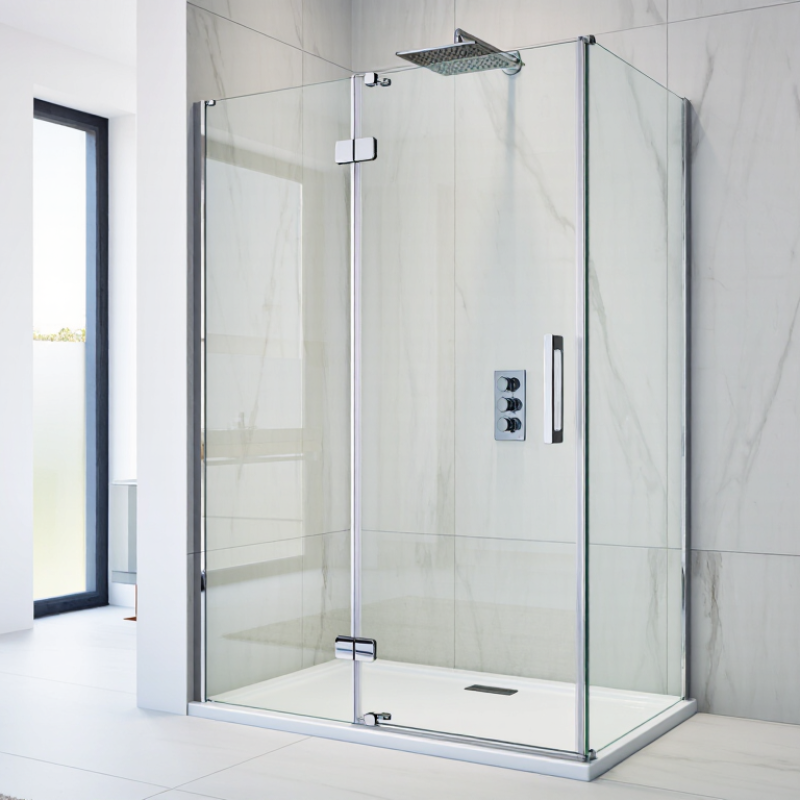
China Top Hinged Shower Door Manufacturers for Global Buyers
What Hinged Shower Doors Are and How They Work
A hinged shower door is a glass panel attached to a fixed wall, return panel, or shower enclosure. It opens by rotating on hinges, much like an interior room door. Most models swing outward, while some configurations allow limited two-way movement. Clear tempered safety glass is commonly used, with typical thicknesses ranging from 6 to 10 millimeters. The exact choice depends on size, hardware, and local installation requirements.
The hinges carry the panel’s weight and control its movement. When the handle is pulled, the panel turns around a vertical hinge line. Silicone seals and bottom sweeps help reduce water escaping through the gaps. A small overlap may look minor, but it can affect daily performance. Poor alignment often causes dripping, rubbing, or uneven closing. Precise measurements matter more than attractive product images.
For global buyers, checking manufacturing details is essential. Ask about glass processing, edge polishing, hinge load testing, surface protection, packaging, and installation instructions. Confirm the door’s swing clearance before placing an order. A bathroom may need 600 millimeters of open space, but layouts vary. Not every hinged door suits a compact room. That assumption causes avoidable problems. Factory drawings should show wall conditions, opening width, glass tolerance, and hardware positions. Even experienced buyers can overlook floor slope or an out-of-square wall, so a site measurement remains valuable.
Hinged shower doors are glass panels attached to a fixed wall, shower panel, or frame with vertical hinges. The hinges allow the door to swing open and closed, usually outward or in both directions depending on the hinge design. The chart shows common nominal widths for single hinged shower doors. Actual dimensions should be confirmed through site measurement and supplier specifications.
Global buyers increasingly source hinged shower doors from China because manufacturing depth supports flexible specifications and competitive pricing. China offers large-scale glass processing, stainless steel fabrication, hardware finishing, and packaging within one supply network. This shortens coordination time. The World Bank’s 2023 Logistics Performance Index ranked China 19th among 139 economies, with a score of 3.7. That logistics capability helps suppliers manage export schedules, mixed containers, and replacement parts more reliably.
Technical customization is another strong advantage. Buyers can request different glass thicknesses, hinge positions, surface finishes, handle shapes, and enclosure dimensions. Experienced factories usually provide CAD drawings, load checks, water-leak testing, and sample approval before mass production. These steps matter when a door must fit a narrow bathroom or uneven wall. UNCTAD reported that Chinese ports handled roughly 30% of global container port throughput in 2022, supporting stable international shipping connections.
However, a low quotation is not proof of real value. Some suppliers present an attractive sample, then change seals, screws, or protective packaging during production. That mistake can create corrosion, breakage, or installation delays. Global buyers should inspect material certificates, verify glass safety standards, and compare inspection records. Factory visits help, but they are not enough. Independent pre-shipment inspection remains useful. Chinese manufacturers offer strong capability, yet quality still depends on clear drawings, controlled components, and disciplined communication.
A leading hinged shower door manufacturer is more than a polished catalogue and a fast quotation. Look for clear evidence of production capability: glass-cutting equipment, consistent edge finishing, accurate hinge drilling, and documented quality checks. Ask how each door is inspected for alignment, smooth opening, and secure hardware attachment. Details matter. A hinge that sits slightly out of position can cause rubbing against the frame or uneven gaps after installation.
Request a sample, technical drawings, and records of relevant product tests before placing a large order. Check glass thickness, hardware materials, available finishes, packaging protection, and replacement-part support. A dependable supplier should explain tolerances and lead times plainly, rather than promising that every project is effortless. Factory photographs help, but they do not replace a live audit or a careful video walkthrough. Speak with export customers, too, and ask about damage rates and response times. No evaluation is perfect; a sample may not reflect every production batch. Keep written specifications and inspect the first shipment closely.
| Evaluation Dimension | What to Look For | Why It Matters | Questions and Evidence to Request |
|---|---|---|---|
| Product and project experience | A documented range of hinged shower doors, including different opening configurations, glass options, finishes, and enclosure layouts. | Relevant experience helps a supplier assess installation conditions, clearances, hardware compatibility, and project-specific requirements. | Request product drawings, technical specifications, and examples of comparable projects. Confirm which configurations are made in-house. |
| Glass safety and compliance | Glass specifications and test documentation that match the regulations applicable in the destination market. Commonly referenced standards include EN 12150 for thermally toughened soda-lime silicate safety glass and, in the United States, ANSI Z97.1 and 16 CFR Part 1201. | Safety requirements depend on the market and product application. A standard reference alone does not prove that a specific finished product complies. | Ask for current test reports or certificates identifying the product, glass type, thickness, testing body, and applicable standard. Verify that the documentation covers the goods being ordered. |
| Hardware and corrosion resistance | Clear specifications for hinges, handles, brackets, seals, and fasteners, including material grades or coating details where applicable. | Hardware affects door movement, alignment, durability, and performance in a wet environment. | Request material and finish specifications, care instructions, and available test evidence for corrosion-resistance claims. Confirm replacement-part availability. |
| Quality management and inspection | Documented production checks for glass dimensions, edge finishing, drilling, hardware fit, door alignment, and final packaging. | Consistent inspection procedures can reduce dimensional variation, assembly issues, and damage discovered after delivery. | Request the inspection checklist, sample inspection records, and the scope and validity of any quality-management certification. Check that the certificate applies to the relevant site and activities. |
| Customization and technical support | Ability to review opening measurements, wall conditions, hardware options, and project drawings before production. | Hinged doors rely on accurate measurements and suitable clearances. Early technical review can identify installation conflicts before fabrication. | Ask how measurements are submitted and approved, what tolerances apply, and who confirms the final drawings before production. |
| Production capacity and lead-time control | Production planning that accounts for order quantity, customization, material availability, inspection, and packing. | Quoted lead times are more useful when they specify the production scope and the point at which the schedule begins. | Request a written schedule covering drawing approval, production, inspection, and dispatch. Confirm how changes or delays are communicated. |
| Packaging and transport protection | Packaging designed to protect glass edges, corners, and hardware during handling and transit, with clear identification for each package. | Glass products are vulnerable to impact and edge damage. Appropriate packing and handling instructions help manage transit risk. | Request packing specifications, loading photos where available, carton or crate dimensions, and instructions for receiving and inspecting the shipment. |
| Export documentation and communication | Experience preparing the documents required for the agreed shipment, such as commercial invoices, packing lists, and transport documents. | Accurate paperwork supports customs processing and helps buyers coordinate freight, receiving, and installation. | Confirm the responsible contact, document list, shipment terms, and process for resolving discrepancies before the order is placed. |
| Warranty and after-sales support | Written warranty terms that define coverage, exclusions, claim procedures, and responsibility for replacement parts. | Clear terms help buyers understand how defects, transit damage, and routine wear are handled after delivery. | Request the warranty document and claims process. Clarify required evidence, response times, and whether spare hardware or seals can be ordered separately. |
| Supplier verification | Consistent company, factory, product, and payment information across quotations, contracts, certificates, and shipment documents. | Cross-checking documents helps buyers assess supplier identity and ensure that claims relate to the actual manufacturing and supply arrangements. | Verify business and factory details independently, arrange a factory audit or third-party inspection when appropriate, and use a contract that specifies product requirements and acceptance criteria. |
Buyer note: Standards, certification requirements, and building regulations vary by destination market and application. Verify current local requirements and confirm that evidence applies to the exact glass and finished product being purchased.
China’s top hinged shower door manufacturers should be judged beyond attractive catalog photos. Product quality begins with suitable materials, such as certified tempered safety glass and corrosion-resistant stainless steel hardware. Check glass thickness, edge polishing, hinge strength, and seal performance. A reliable manufacturer should provide inspection records, material traceability, and clear warranty terms.
Customization requires practical engineering, not only color selection. Confirm the exact opening width, glass height, hinge position, and wall conditions. Uneven walls can affect installation. Ask for technical drawings before production. Request a physical sample when finishes matter, especially for brushed metal or matte black surfaces. Factory audits, production photos, and water-leak testing can reveal more than sales promises. Still, no supplier gets every detail right. Small measurement changes may cause delays, so buyers should review drawings carefully.
Tips: Test the door through repeated opening cycles. Inspect packaging corners and protective films. Compare the approved sample with mass production. Ask how replacement parts are supplied. Leave realistic time for correction; rushing approval often creates expensive mistakes. A capable manufacturer will explain limitations clearly, not simply accept every request.
Comparing suppliers takes more than checking catalog photos. Ask for the glass thickness, hinge material, finish options, and adjustment range. A clear specification sheet makes quotations easier to compare. Request drawings that show opening direction and required wall space. Small details matter. A door that looks suitable online may not fit a narrow bathroom entrance.
Check how each supplier handles sampling, inspection, packing, and delivery. Ask whether the quoted price includes protective corner guards, export packaging, and spare hardware. Confirm production time in writing, then allow room for shipping delays and customs processing. Review payment milestones and the process for reporting damage on arrival. A video call can help clarify workshop capabilities, but it does not replace written records. I have found that buyers sometimes focus too heavily on unit price; that is an easy mistake to make.
Tips: Send the same checklist to every shortlisted supplier. Compare like with like. Keep approved drawings, finish samples, and inspection criteria together. Before placing a large order, consider a trial shipment and check the packaging yourself. It takes extra time, and it may reveal issues you did not expect.


