


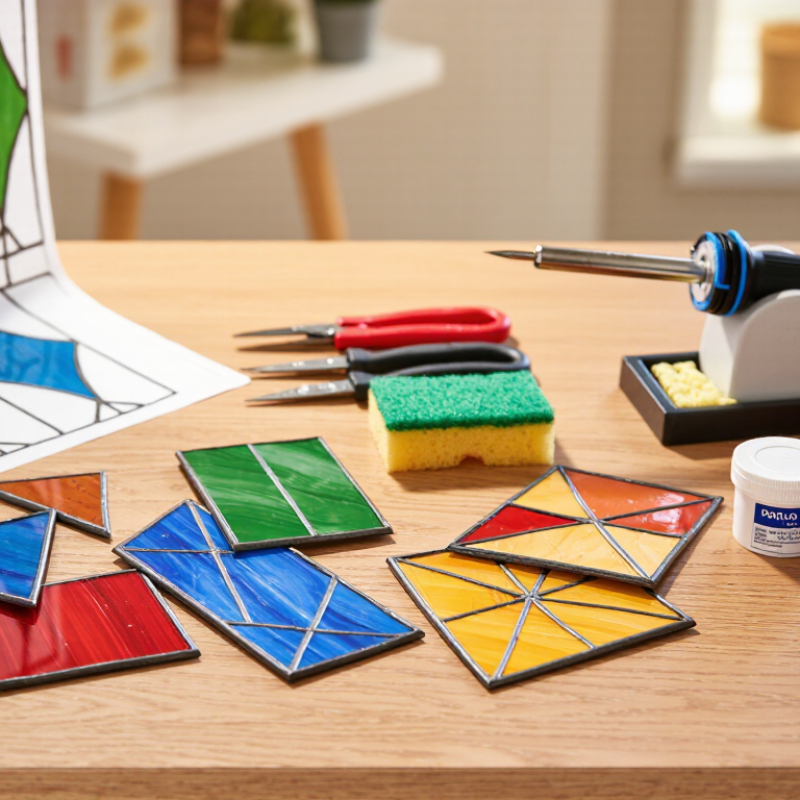
In 2026, beginner stained glass window kits differ widely in quality and completeness. Some include glass pieces, copper foil, solder, and patterns. Others provide only the basic materials. Check the contents before buying. A beginner-friendly pattern should use simple curves and manageable shapes. Small geometric designs are usually less frustrating than detailed portraits. Start small.
Glass cutting requires patience, eye protection, and a stable work surface. The cutter should feel comfortable in your hand, not merely look professional. Practice on spare glass before touching the project pieces. Uneven cuts can create sharp points and unnecessary waste. Keep a brush nearby for tiny glass fragments. Never sweep them casually onto the floor. Soldering also needs ventilation, heat protection, and careful temperature control. Read every safety instruction supplied with the kit. If the instructions seem vague, that is a warning sign.
Copper foil work often looks easy in photographs. It is not always easy. Foil alignment affects the final seams, and rushed wrapping can make corners peel. Work slowly around each edge. A beginner may produce lines that are slightly uneven. That is normal, but it deserves honest inspection. Before hanging the finished panel, check every joint and edge for weakness. Window exposure adds stress from movement, moisture, and temperature changes. A display panel placed indoors is often a wiser first project. My practical preference is a kit with clear diagrams, measured templates, replacement guidance, and realistic project dimensions. Fancy extras matter less than understandable instructions and safe, repeatable steps.